The Ultimate Moving Checklist: Your Week-by-Week Timeline
Plan your move stress-free with our complete week-by-week moving checklist. From 8 weeks out to moving day, never miss a step.
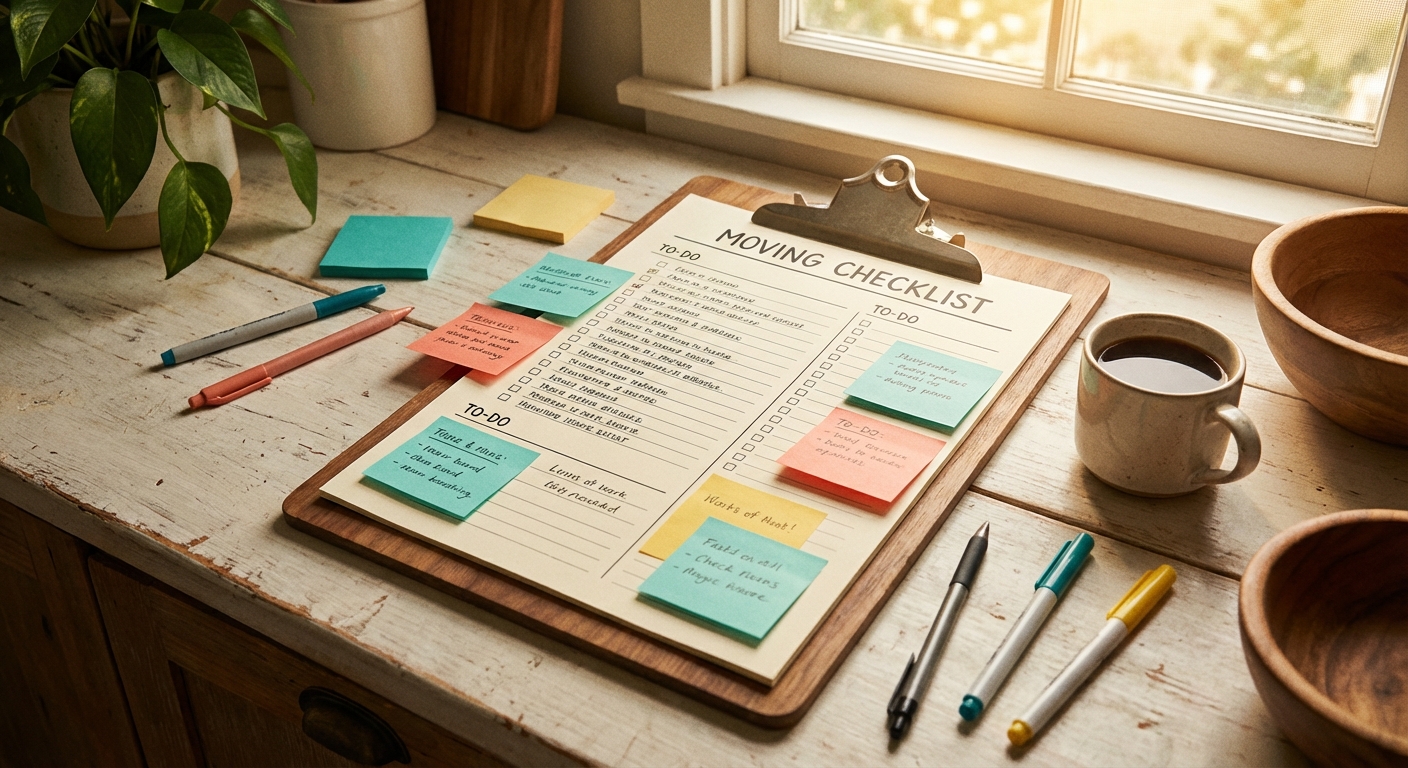
Moving is one of those experiences that sounds simple until you actually do it. You think you will just throw everything in boxes and drive to the new place, and then suddenly it is moving day and you cannot find your phone charger, the utilities are not set up, and half your dishes are broken.
The difference between a smooth move and a chaotic one almost always comes down to planning. After helping thousands of people connect with reliable movers across the country, we have seen what works and what does not. This week-by-week moving checklist breaks down every task you need to handle, starting 8 weeks before your move.
Print it out, bookmark it, or save it to your phone. You will thank yourself later.
8 Weeks Before Moving Day
This is where the smart planning happens. You are not packing anything yet, but the decisions you make now will save you hours (and dollars) later.
Research and Book Movers
Start getting quotes from moving companies immediately. The best movers book up fast, especially during peak season (May through September). Get at least three in-home or virtual estimates so you can compare pricing and services.
If you are moving locally within a city like Los Angeles or Houston, you will typically find more availability than long-distance moves, but do not wait until the last minute regardless.
Key tasks this week:
- Request moving quotes from at least 3 companies. You can get free quotes here to compare pricing quickly.
- Check reviews and verify the mover’s USDOT number if moving across state lines
- Decide whether to hire full-service movers or handle packing yourself
- If moving for work, confirm whether your employer offers relocation assistance
- Choose your moving date (mid-month and mid-week moves are usually cheaper)
Start a Moving Binder or Folder
Create a dedicated place for all your moving documents. This includes your lease or closing paperwork, moving company contracts, receipts, and your checklist. A simple folder on your phone works too, but having everything in one place is the key.
7 Weeks Before Moving Day
Declutter and Downsize
This is the single most impactful thing you can do before a move. Every item you get rid of is one less thing to pack, carry, and unpack. Moving companies charge by weight and volume, so less stuff literally means less money.
Go room by room and sort everything into four categories:
| Category | What Goes Here |
|---|---|
| Keep | Items you use regularly and want in your new home |
| Sell | Items in good condition you can sell online or at a garage sale |
| Donate | Usable items you no longer need |
| Trash | Broken, expired, or worn-out items |
Be ruthless. If you have not used something in the past year, you probably do not need it. That bread maker collecting dust in the back of the pantry? Someone else will actually use it.
Inventory Valuable Items
Walk through your home and photograph or video any high-value items: electronics, artwork, antiques, jewelry. This documentation is essential for insurance purposes. Note serial numbers for electronics and get appraisals for anything particularly valuable.
6 Weeks Before Moving Day
Handle School and Medical Records
If you are moving to a new area, now is the time to handle these administrative tasks:
- Request school records and transcripts for your kids
- Ask your doctors, dentists, and specialists for copies of medical records
- Get referrals to new providers in your destination city
- Transfer prescriptions to a pharmacy near your new address
- Request veterinary records if you have pets
Begin Researching Your New Area
If you are relocating to a new city, start learning about your new neighborhood. Look into grocery stores, hospitals, parks, and commute routes. People moving to major metro areas like Chicago or Phoenix often find that neighborhoods can vary dramatically within just a few miles.
5 Weeks Before Moving Day
Start Using Up What You Have
Stop buying bulk groceries and household supplies. Start using up what is in your pantry, freezer, and under your bathroom sink. This is a great time to get creative with meals using whatever is left in the freezer.
Gather Packing Supplies
You will need more supplies than you think. Here is what to stock up on:
- Small boxes for heavy items like books and canned goods
- Medium boxes for kitchen items, toys, and general household goods
- Large boxes for lightweight bulky items like linens and pillows
- Wardrobe boxes for hanging clothes (worth every penny)
- Packing paper (not newspaper, which smudges)
- Bubble wrap for fragile items
- Packing tape and a tape dispenser
- Markers for labeling
- Ziplock bags for small hardware and screws
Pro tip: Check your local buy-nothing groups, liquor stores, and bookstores for free boxes. Just make sure they are sturdy and clean.
4 Weeks Before Moving Day
Start Packing Non-Essential Rooms
Begin with rooms and items you use the least. Guest bedrooms, storage areas, seasonal decorations, and books are all great starting points.
Label every box on at least two sides with:
- The room it belongs to
- A brief description of contents
- Whether it is fragile
Notify Important Parties of Your Address Change
This is a big one that people tend to procrastinate on. Start working through your change of address checklist now rather than scrambling after the move.
Priority notifications:
- USPS mail forwarding (do this online at usps.com)
- Employer and payroll department
- Banks and credit card companies
- Insurance providers (health, auto, home/renters)
- DMV for driver’s license and vehicle registration
3 Weeks Before Moving Day
Pack Room by Room
Now the packing gets serious. Work through one room at a time, finishing each before moving to the next. This keeps things organized and prevents the “everything is half-packed” chaos.
Smart packing order:
- Storage areas and garage
- Guest rooms and spare bathrooms
- Home office (if you can work from a laptop temporarily)
- Dining room
- Living room (save entertainment setup for last)
- Kids’ rooms
- Primary bedroom
- Kitchen (last, since you need it until the end)
For tips on packing your most breakable items, check out our guide on how to pack dishes and glassware.
Arrange Utility Transfers
Contact utility companies to schedule disconnection at your current home and connection at your new home. Aim to have utilities turned on at the new place one to two days before you arrive.
Utilities to transfer or set up:
- Electricity
- Gas
- Water and sewer
- Internet and cable
- Trash and recycling service
2 Weeks Before Moving Day
Confirm Everything With Your Movers
Call your moving company to confirm the date, time, and any special instructions. Review the estimate and make sure nothing has changed. Ask about their payment methods and whether they accept credit cards on moving day.
Handle Food and Plants
Start eating through your refrigerator and freezer in earnest. Plan meals around what you have left. Most movers will not transport perishable food, open containers, or houseplants (especially across state lines due to agricultural regulations).
Give away or toss:
- Open pantry items
- Perishable foods you cannot consume in time
- Hazardous materials (paint, chemicals, propane tanks)
- Anything flammable or explosive
Take Measurements at Your New Home
If possible, measure doorways, staircases, and rooms at your new place. There is nothing worse than discovering your couch does not fit through the front door on moving day. While you are there, plan your furniture layout so movers know where to place heavy items.
1 Week Before Moving Day
Pack Your Essentials Box
This is the most important box you will pack. It goes with you in your car, not on the truck. Think of it as your survival kit for the first 24 to 48 hours in your new home.
Your essentials box should include:
| Category | Items |
|---|---|
| Bathroom | Toilet paper, towels, soap, toothbrush, toiletries |
| Kitchen | Paper plates, cups, utensils, dish soap, snacks, coffee maker |
| Bedroom | Sheets, pillows, pajamas, change of clothes |
| Tech | Phone chargers, laptop, power strip, WiFi router |
| Important docs | IDs, lease/closing papers, moving contract |
| Misc | Medications, first aid kit, trash bags, basic tools |
Do a Final Walk-Through
Check every room, closet, cabinet, and drawer. Check the attic, basement, garage, and any outdoor storage. People commonly forget items in:
- The top shelf of bedroom closets
- Kitchen cabinets above the refrigerator
- Bathroom medicine cabinets
- Garage rafters or storage shelves
- Outdoor sheds
- Behind the washer and dryer
Clean or Arrange Cleaning
If you are renting, you will likely need to leave the place clean to get your security deposit back. Either plan to clean after the movers leave or hire a cleaning service to come in after you are out.
2-3 Days Before Moving Day
Disassemble Furniture
Take apart bed frames, dining tables, desks, and shelving units. Keep all hardware in labeled ziplock bags and tape them directly to the furniture piece they belong to. Take photos of complex assemblies so you remember how they go back together.
Do Laundry
Wash all your clothes and linens so everything is clean when you pack it. Use suitcases for heavy items like folded jeans and towels rather than wasting box space.
Charge Everything
Charge all devices, portable batteries, and anything else electronic. Moving day is long, and you will need your phone for coordinating with movers.
Moving Day
You have been preparing for this. Here is how to make the actual day go smoothly.
Morning Tasks
- Do a final sweep of every room
- Strip beds and pack remaining linens
- Defrost and clean out the refrigerator
- Take out any remaining trash
- Set aside items that go in your car, not the truck
When the Movers Arrive
- Walk them through the house and point out fragile items
- Show them anything that needs special handling
- Make sure they know which items are NOT going on the truck
- Keep your essentials box, valuables, and important documents with you
- Offer water and snacks (a small gesture that goes a long way)
If you are wondering about tipping etiquette, our guide on how much to tip movers covers everything you need to know.
Before You Leave
- Check every room one final time (yes, again)
- Read all utility meters and take photos
- Lock all windows and doors
- Leave keys, garage openers, and any access cards as arranged
- Take a photo of the empty home for your records
After the Move: First Week in Your New Home
Day 1
- Supervise unloading and direct furniture placement
- Check all items against your inventory for damage
- Set up beds first so everyone can sleep comfortably
- Unpack your essentials box
- Locate the nearest grocery store and pharmacy
Days 2-3
- Unpack kitchen essentials
- Set up bathrooms
- Get internet and cable working
- Introduce yourself to neighbors
First Week
- Unpack remaining rooms at a steady pace
- Update your address with any remaining accounts
- Register to vote at your new address
- Get a new driver’s license if you moved to a new state
- Register your car in your new state if applicable
- Find new local service providers (doctors, dentist, vet)
- Explore your new neighborhood
Money-Saving Tips Throughout Your Move
Moving does not have to break the bank. Here are ways to save at every stage:
- Move mid-month and mid-week when rates are lowest
- Declutter aggressively to reduce the weight and volume of your shipment
- Get multiple quotes and negotiate with movers
- Use what you have for packing (towels, t-shirts, and socks make great padding)
- Ask about military, senior, or AAA discounts from moving companies
- Keep receipts because moving expenses may be tax-deductible for work-related relocations
When to Ask for Help
Some moves are straightforward enough to handle on your own, and some really are not. If you are moving a large household, navigating a long-distance relocation to somewhere like Dallas or Atlanta, or dealing with heavy or specialty items, professional movers are worth every penny. Our DIY move vs hiring movers comparison can help you decide what makes sense for your situation.
Ready to start planning? Get free moving quotes from vetted, licensed movers in your area and cross the biggest item off your checklist today.
Frequently Asked Questions
How far in advance should I start planning my move?
What is the most commonly forgotten task when moving?
Should I pack room by room or category by category?
How many boxes do I need for a typical move?
What should I pack last and unpack first?
Our team of moving experts creates practical, research-backed guides to help make your next move easier.
Related Articles
Long Distance Moving: How to Coordinate Your Vehicle and Household Move
Learn how to coordinate your vehicle and household move for a long-distance relocation, from one master timeline to delivery windows and arrival-day choreography.

Shipping a Car vs Driving It During a Long-Distance Move
Compare shipping a car vs driving it during a long-distance move, including costs, timing, wear and tear, auto transport options, and how to decide.
How to Prepare Your Car Before a Long-Distance Move
Learn how to prepare your car before a long-distance move, from maintenance checks and tire inspections to packing an emergency kit and planning your route.