DIY Move vs Hiring Movers: The Real Cost Comparison
Should you move yourself or hire movers? Compare the true costs of DIY moving vs professional movers including hidden expenses most people forget.
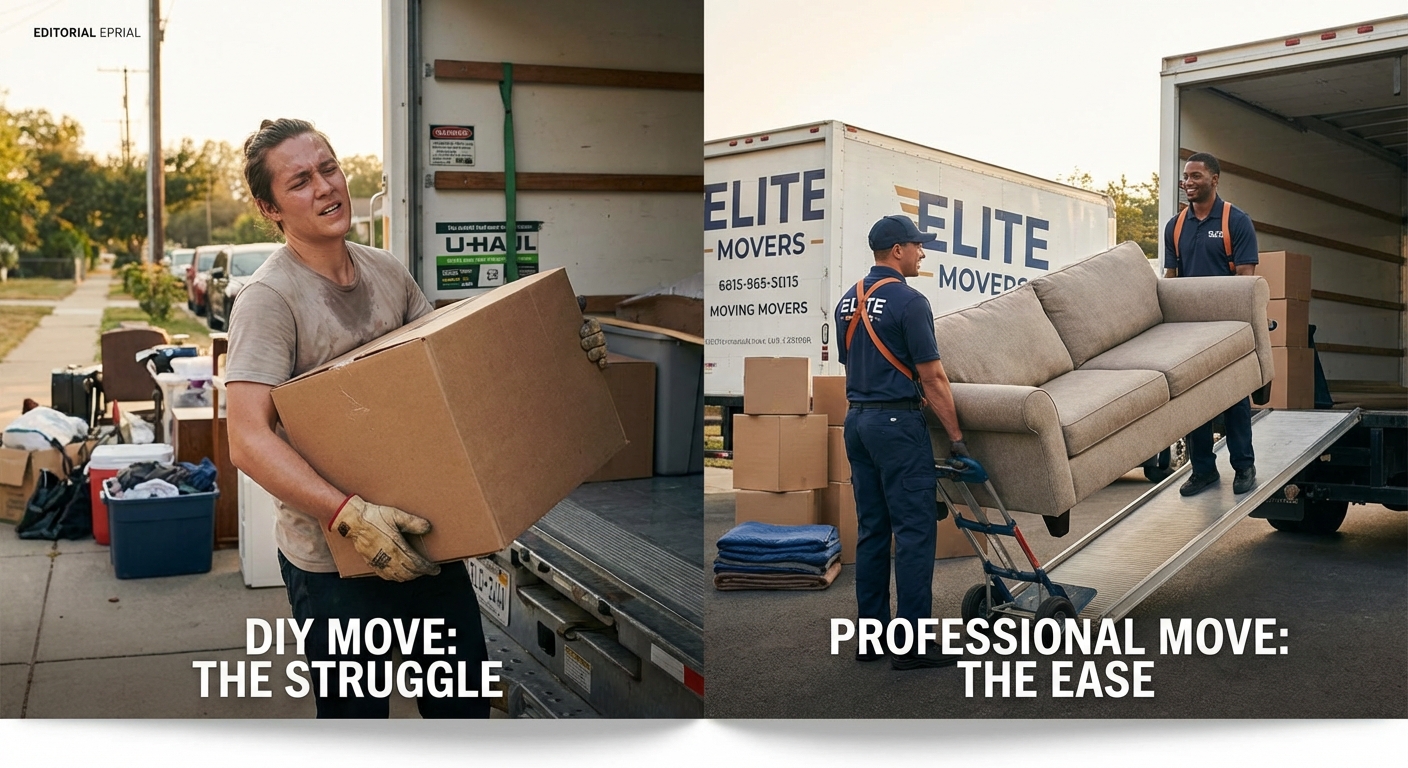
Everyone who has ever moved has faced this question: should I save money and do it myself, or spend more and hire professionals?
The common assumption is that DIY is always cheaper. And sometimes it is. But “cheaper” and “better value” are not the same thing, and most people dramatically undercount the true costs of moving themselves.
This guide breaks down the real, complete costs of both options so you can make an informed decision based on your specific situation, not guesswork.
The True Cost of a DIY Move
Most people add up the truck rental cost and call it a day. That is only a fraction of what a DIY move actually costs.
Direct Expenses
Truck rental: The biggest line item. Prices vary based on truck size, distance, and season.
| Truck Size | Fits | Local Rate (per day) | One-Way (long distance) |
|---|---|---|---|
| 10 ft | Studio/small 1BR | $30-$50 | $400-$800 |
| 15 ft | 1-2 BR | $40-$70 | $600-$1,200 |
| 20 ft | 2-3 BR | $50-$90 | $800-$1,500 |
| 26 ft | 3-4 BR | $60-$120 | $1,200-$2,500 |
Gas: Moving trucks get terrible gas mileage. A 26-foot truck gets roughly 8-10 miles per gallon. For a 1,000-mile move, that is 100-125 gallons of gas, or $350-$500 at current prices.
Insurance: The basic rental truck coverage is minimal. Supplemental insurance (damage waiver, cargo protection, personal accident) runs $25-$60 per day.
Packing supplies: Boxes, tape, packing paper, bubble wrap, and specialty materials typically cost $100-$300 for a 2-3 bedroom home.
Equipment rental: Furniture dolly, appliance dolly, moving blankets, and straps. Budget $30-$75 per day if not included with the truck.
Tolls and parking: Depending on your route, toll costs can add $20-$100 or more for long-distance moves.
Food: You and whoever helps you will eat. Budget for pizza, drinks, and snacks on moving day ($50-$100) plus meals during a long-distance drive ($30-$50 per day).
Hotels: If your move requires overnight driving, budget $100-$200 per night. A coast-to-coast drive typically requires 4-5 nights.
Thank-you compensation for friends: If friends help you move, you should at minimum buy food and drinks. Many people also give $50-$100 to friends who spend a full day helping.
Hidden Costs Most People Forget
Your time: This is the big one. A DIY move easily consumes 40-60 hours of your time (packing, loading, driving, unloading, unpacking, returning the truck). What is that time worth to you?
Damage and breakage: Without professional training and equipment, things break. No insurance covers your belongings in a rental truck. The average DIY mover experiences $200-$500 in damage or breakage, though it can be much more.
Physical risk: Back injuries, pulled muscles, crushed fingers, and strained joints are common during self-moves. An emergency room visit or weeks of chiropractic care can easily exceed what you saved by not hiring movers.
Wear on your vehicle: If you tow your car behind the truck, you are putting extra miles and wear on it. If you make multiple trips locally, same story.
Stress and exhaustion: This is harder to quantify but very real. A DIY move is physically and mentally exhausting. Many people lose several productive days recovering.
Real-World DIY Cost Example
2-bedroom apartment, local move (20 miles):
- Truck rental (1 day): $75
- Gas: $30
- Insurance: $35
- Packing supplies: $150
- Equipment rental: $40
- Pizza and drinks for 2 helpers: $80
- Total: approximately $410
3-bedroom house, long-distance move (1,500 miles):
- Truck rental (one-way): $1,800
- Gas (190 gallons): $660
- Insurance (4 days): $160
- Packing supplies: $250
- Equipment rental: $50
- Hotels (3 nights): $450
- Food (4 days): $200
- Tolls: $60
- Car towing equipment: $150
- Total: approximately $3,780
The True Cost of Hiring Movers
Professional moving costs are more transparent because you get a quote that covers most of the work. But there are still variables to understand.
What Is Included in a Typical Quote
- Loading all furniture and boxes onto the truck
- Transporting everything to your new home
- Unloading at the destination
- Basic furniture disassembly and reassembly
- Furniture blanket wrapping for protection
- Basic valuation coverage (released value at $0.60 per pound per item)
What Costs Extra
- Full packing service: $300-$2,000 depending on home size
- Full value protection insurance: $100-$500 depending on declared value
- Stair charges: $50-$100 per flight
- Long carry fees: If the truck cannot park within 75 feet of your door
- Shuttle services: If a large truck cannot access your street
- Specialty items: Piano, hot tub, pool table, or other heavy/unusual items
- Storage: If you need temporary storage between homes
- Tips: Plan for $20-$40 per mover for local, $40-$80 per mover for long-distance
Real-World Professional Mover Cost Example
2-bedroom apartment, local move (20 miles):
- 3-mover crew for 4 hours at $150/hour: $600
- Travel time: $75
- Materials fee: $50
- Tip ($30 x 3 movers): $90
- Total: approximately $815
3-bedroom house, long-distance move (1,500 miles):
- Base rate (weight + distance): $4,500
- Full value protection: $200
- Stair charge: $100
- Tip ($50 x 4 movers): $200
- Total: approximately $5,000
Side-by-Side Comparison
Here is how the costs stack up across different scenarios:
Local Move (Under 50 Miles)
| Home Size | DIY Cost | Professional Cost | Savings With DIY |
|---|---|---|---|
| Studio/1BR | $200-$400 | $400-$800 | $200-$400 |
| 2BR | $300-$500 | $700-$1,400 | $400-$900 |
| 3BR | $400-$700 | $1,000-$2,000 | $600-$1,300 |
| 4BR | $500-$900 | $1,500-$2,500 | $1,000-$1,600 |
Long-Distance Move (1,000+ Miles)
| Home Size | DIY Cost | Professional Cost | Savings With DIY |
|---|---|---|---|
| Studio/1BR | $1,200-$2,000 | $2,000-$3,500 | $800-$1,500 |
| 2BR | $2,000-$3,500 | $3,500-$5,500 | $1,500-$2,000 |
| 3BR | $3,000-$5,000 | $4,500-$7,000 | $1,500-$2,000 |
| 4BR | $4,000-$6,500 | $6,000-$9,500 | $2,000-$3,000 |
Notice how the savings gap narrows significantly for larger homes and longer distances. The bigger and farther the move, the less you save by doing it yourself.
When DIY Makes Sense
A self-move is the better choice when:
- You have a small home (studio or 1-bedroom) with minimal heavy furniture
- You are moving locally and can make multiple trips if needed
- You have willing helpers who are physically able and available
- You have flexibility with timing and no strict deadlines
- Your budget is genuinely tight and the savings are meaningful
- You enjoy the process (some people genuinely like the control of doing it themselves)
- You do not have heavy or valuable items that require special handling
- Your home has easy access with no stairs, elevators, or long walks from the parking area
Tips for a Successful DIY Move
If you decide to go the DIY route:
- Reserve the truck well in advance, especially for end-of-month moves
- Get a truck slightly larger than you think you need
- Load heavy items first and distribute weight evenly
- Use furniture blankets and straps to secure everything
- Drive carefully: moving trucks handle very differently than your car
- Pack smart using professional packing hacks
- Start as early in the day as possible
When Hiring Movers Makes Sense
Professional movers are the better choice when:
- You have a large home (3+ bedrooms) with lots of furniture
- You are moving long distance (100+ miles or across state lines)
- You have heavy or specialty items (piano, safe, pool table, gym equipment)
- Your home has stairs or difficult access
- You have valuable or fragile items that need professional handling
- You have physical limitations or health concerns
- Your time is valuable and the days spent moving cost you income or productivity
- You are moving for work and your employer may cover the cost
- You want insurance protection for your belongings during the move
What to Look for in Movers
If you go the professional route:
- Get at least three in-home or virtual estimates
- Verify USDOT numbers for interstate moves
- Read reviews on Google and the BBB
- Get a binding or binding not-to-exceed estimate
- Understand what is and is not included in the quote
- Ask about insurance and valuation coverage options
Whether you are moving across Los Angeles or from Houston to New York, comparing quotes is the best way to know what professional help will actually cost. Get free quotes from licensed movers to see the real numbers for your move.
The Hybrid Approach: Best of Both Worlds
You do not have to choose exclusively between DIY and full-service movers. Many people use a hybrid approach that combines the savings of DIY with professional help for the hardest parts.
Option 1: Labor-Only Movers
Hire movers for the loading and unloading only. You rent the truck (or container), you pack, you drive. They handle the heavy lifting.
Cost: $200-$600 for local loading and unloading Savings: You save on the full moving company markup while avoiding the physical strain
Option 2: Pack and Load Only
Hire movers to pack your home and load the truck. You drive the rental truck or use a moving container. A different crew (or you) unloads at the destination.
Option 3: Move the Big Stuff, Drive the Small Stuff
Hire movers for furniture and heavy items only. Transport boxes and smaller items yourself in your car or a small trailer. This works well for local moves in metro areas like Chicago or Phoenix where you can make multiple trips.
Option 4: Professional Kitchen Packing Only
Pack every room yourself except the kitchen. Hire movers to professionally pack the kitchen, which is the room with the most fragile items and the one most people dread packing. This typically costs $150-$400 and saves you the hardest 4-8 hours of packing.
The Decision Framework
Still not sure which route to take? Run through these questions:
1. What is your budget? If you have less than $500 for a local move or less than $2,000 for a long-distance move, DIY is probably your only option.
2. How much stuff are you moving? The more you have, the more professional movers save you in time and physical effort.
3. How far are you moving? Local moves favor DIY. Long-distance moves favor professionals.
4. What is your physical ability? Be honest with yourself. If you have any back issues, joint problems, or health concerns, the risk of injury during a DIY move is not worth the savings.
5. How much is your time worth? Calculate the hours a DIY move will take and multiply by your hourly wage (or what you could earn during that time). If the time cost exceeds the savings, hiring movers is the better financial decision.
6. Do you have help? A solo DIY move is brutal. If you have 2-3 strong, willing friends available for the full day, DIY becomes much more viable.
The Bottom Line
There is no universally right answer. For a small local move, DIY is usually the clear winner financially. For a large long-distance move, hiring professionals offers better value once you account for all the hidden costs and the value of your time.
The best approach is to get actual numbers for both options. Get quotes from moving companies to see what professional service costs for your specific move. Compare that to the true all-in cost of doing it yourself. The right choice will be obvious once you see real numbers side by side.
Ready to see what professional movers would charge for your move? Get free, no-obligation quotes and make your decision with real data.
Frequently Asked Questions
Is it really cheaper to move yourself?
What is the biggest hidden cost of a DIY move?
Can I hire movers just for the heavy stuff?
Who is responsible if something breaks during a DIY move?
At what point does hiring movers make more financial sense than DIY?
Our team of moving experts creates practical, research-backed guides to help make your next move easier.
Related Articles
DIY Move vs. Hiring Professionals: Which Saves You More?
Compare DIY moving and hiring professional movers to see which option really saves more money, time, and stress for your specific situation.
How Much Does It Really Cost to Hire Movers?
Discover the real cost of hiring movers, including hidden fees, unexpected expenses, and the true comparison between DIY and professional moving.
Budget-Friendly Moving Tips That Actually Work
Save money on your next move with proven budget-friendly moving tips. Learn how to cut costs on packing, timing, quotes, and supplies without sacrificing quality.