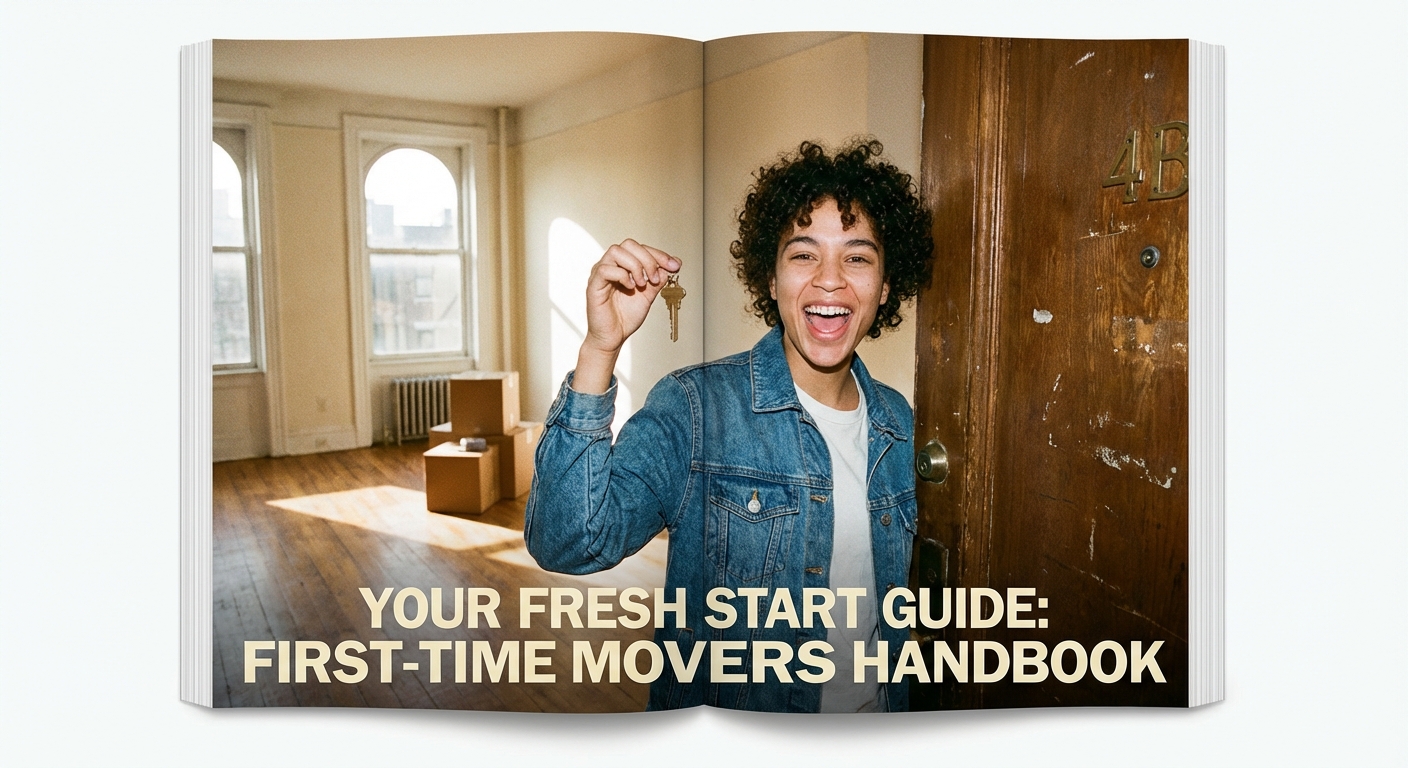
Moving for the first time can feel overwhelming. Whether you’re leaving your parents’ house, moving out of a college dorm, relocating for your first job, or renting your own apartment for the first time, there’s a lot to figure out. And unlike most things in life, you can’t exactly practice moving before you do it.
That’s what this handbook is for. We’ve helped thousands of people navigate their first moves, and we’ve put everything we know into this single, comprehensive guide. Think of it as the advice a helpful neighbor would give you – the kind of neighbor who happens to know a lot about moving.
We’ll walk you through every step: deciding when and where to move, figuring out your budget, choosing between DIY and professional movers, packing up your life, surviving moving day, and settling into your new home. No jargon, no fluff, just practical advice you can actually use.
Part 1: Before You Start Packing
Deciding to Move
Before you dive into logistics, take a moment to think through the fundamentals:
Why are you moving? Your reason for moving shapes every decision that follows. A job relocation has different urgency and budget considerations than upgrading to a bigger apartment. Understanding your “why” helps you prioritize what matters.
When do you need to move? If you have flexibility, you can save money by choosing an off-peak time. If your lease ends on a specific date or you start a new job on Monday, your timeline is fixed.
What’s your budget? This is the question that governs everything. Moving costs more than most first-timers expect. Our moving cost guide gives you detailed numbers, but as a quick reference:
| Move Type | Rough Budget Range |
|---|---|
| Local studio/1BR (DIY) | $200 - $500 |
| Local studio/1BR (professional) | $300 - $1,500 |
| Local 2-3BR (professional) | $800 - $3,500 |
| Long distance 1BR | $1,500 - $4,000 |
| Long distance 2-3BR | $2,500 - $8,000 |
Apartment vs. house? The type of home you’re moving into affects planning:
| Factor | Apartment | House |
|---|---|---|
| Access | Elevators, hallways, stairs | Driveways, front doors |
| Restrictions | Elevator booking, move-in hours, service entrance | Generally fewer restrictions |
| Parking | May need to reserve loading zone | Usually truck can park close |
| Size | Typically smaller, fewer items | More space, more to move |
| Deposits | Security deposit + possible move-in fee | Security deposit, sometimes larger |
Setting Your Timeline
A realistic timeline is your best friend. Here’s what a first-time mover’s schedule looks like.
8+ Weeks Out (The Planning Phase)
- Determine your budget
- Research neighborhoods and rental/housing options
- Sign your new lease or close on your home
- Give notice to your current landlord (check your lease for required notice period)
- Start researching moving options (DIY vs. professional)
6-8 Weeks Out (The Preparation Phase)
- Get moving quotes from at least 3 companies via Moving Company HQ
- Or reserve a rental truck if going DIY
- Start decluttering – sell, donate, or toss what you don’t need
- Begin collecting packing supplies
- Create a moving binder or digital folder for all moving-related documents
4-6 Weeks Out (The Packing Phase Begins)
- Start packing non-essential items (seasonal clothes, books, decorations)
- Schedule utility transfers and setups
- Forward your mail through USPS
- Update your address with banks, subscriptions, employer, and insurance
2-4 Weeks Out (The Packing Phase Continues)
- Pack room by room, labeling every box
- Confirm moving company details or rental truck reservation
- Plan your essentials box (things you need immediately at the new place)
- Clean your current home as you empty rooms
- Take photos/video of your current place for security deposit documentation
1 Week Out (Final Preparations)
- Finish packing everything except daily essentials
- Defrost and clean fridge/freezer
- Confirm all details with movers
- Pack your personal bag (overnight bag with clothes, toiletries, medications)
- Charge all devices and download offline maps/entertainment for the drive
Moving Day
- Do a final walkthrough of every room, closet, and storage area
- Hand keys to landlord or leave as instructed
- Take photos of empty apartment for deposit purposes
Part 2: Understanding Your Moving Options
As a first-time mover, you have several options. The right choice depends on your budget, physical ability, timeline, and how much stuff you’re moving.
Option 1: Full DIY
What it involves: You rent a truck, recruit friends, and do everything yourself.
Best for: Local moves, small apartments, tight budgets, people with willing helpers.
What you’ll need:
- Rental truck (U-Haul, Penske, Budget)
- Dolly and furniture straps (usually available from the truck rental company)
- Friends who owe you favors (and pizza/beer to thank them)
- Packing materials
- Furniture pads or moving blankets
Realistic costs:
| Item | Cost |
|---|---|
| Truck rental (local, 1 day) | $30 - $150 |
| Fuel | $20 - $80 |
| Equipment rental (dolly, pads) | $20 - $50 |
| Packing materials | $50 - $200 |
| Food/drinks for helpers | $30 - $100 |
| Total | $150 - $580 |
Honest assessment: DIY saves money but is physically exhausting, time-consuming, and carries risk of injury or damage to your belongings and the homes. If you have heavy furniture or need to navigate stairs, think carefully before committing to a fully DIY move.
Option 2: Labor Only (You Provide the Truck)
What it involves: You rent the truck and handle packing, but hire professional laborers for loading and unloading.
Best for: People who can pack and drive but don’t want the physical strain of loading/unloading.
Typical cost: $150-$400 for 2-3 hours of labor (2 movers)
Option 3: Moving Container
What it involves: A company delivers a container to your address, you pack and load it, and they transport it to your new location.
Best for: Flexible timelines, long distance moves on a budget, people who can load but don’t want to drive.
Popular companies: PODS, 1-800-PACK-RAT, U-Pack
Typical cost:
| Move Type | Container Cost |
|---|---|
| Local | $200 - $600 |
| Long distance (1,000 miles) | $2,000 - $5,000 |
Option 4: Professional Moving Company
What it involves: Licensed movers handle loading, transportation, and unloading. Can include packing and unpacking services.
Best for: Long distance moves, families, anyone who wants the least stress and most protection.
Typical cost: See our detailed breakdowns in the moving cost guide.
What’s included in a standard move:
- Loading your belongings onto the truck
- Transporting them to your new address
- Unloading at the destination
- Basic furniture disassembly/reassembly (beds, tables)
- Floor and door frame protection
- Basic liability coverage
What costs extra:
- Packing and unpacking
- Specialty item handling (pianos, pool tables, etc.)
- Stair carries, long carries, elevator usage
- Storage
- Saturday/weekend service
For help choosing between these options, our guide on how to choose a moving company walks through every consideration in detail.
Part 3: Finding and Hiring Movers
If you’ve decided to hire professionals (even for labor-only help), here’s how to do it right as a first-time mover.
Where to Find Movers
- Quote comparison platforms: Moving Company HQ lets you compare estimates from multiple licensed movers in one place.
- Personal recommendations: Ask friends, family, coworkers, and neighbors.
- Online reviews: Check Google, Yelp, and the Better Business Bureau.
- FMCSA database: Verify any interstate mover at protectyourmove.gov.
Questions to Ask Every Moving Company
Before hiring, ask these questions. A reputable company will answer all of them clearly:
- Are you licensed and insured? Ask for their USDOT number (interstate) or state license number (local).
- How do you calculate the price? Hourly for local, weight/distance for long distance.
- What’s included in your estimate? Loading, driving, unloading – what else?
- What’s NOT included? Stairs, long carries, packing, disassembly?
- What type of estimate is this? Binding, non-binding, or binding not-to-exceed?
- What liability coverage do you offer? Released value vs. full value protection.
- What’s your cancellation policy? How much notice do you need?
- What’s your claims process? How do I report damaged items?
- Will you subcontract my move? Will the crew that loads also be the crew that unloads?
- Can you provide references? Recent customers who can vouch for their service.
Red Flags for First-Time Movers
These warning signs should make you walk away:
- No physical address. Legitimate companies have offices.
- No USDOT number. Required for any interstate move.
- Large deposit required upfront. Most legitimate movers charge a small booking deposit or nothing until delivery.
- Quote given without seeing your stuff. An over-the-phone quote without a virtual or in-person survey is a guess at best, a scam at worst.
- Dramatically lower price than competitors. If one quote is 40% lower than the others, something is wrong.
- Generic rental truck (no company branding). Professional companies have branded equipment.
- Pressure to sign immediately. “This price is only good today” is a sales tactic, not a legitimate deadline.
- No written estimate. Everything should be in writing.
For a deep dive into evaluating movers, read our definitive guide to choosing a moving company.
Part 4: Packing Like a Pro
Packing is where first-time movers most often underestimate the time and effort involved. Start early, work systematically, and follow these principles.
Packing Supplies Checklist
| Supply | What You Need (1BR) | What You Need (2-3BR) |
|---|---|---|
| Small boxes | 10-15 | 20-30 |
| Medium boxes | 10-15 | 20-35 |
| Large boxes | 5-10 | 10-20 |
| Wardrobe boxes | 1-2 | 2-4 |
| Packing tape | 3-4 rolls | 5-8 rolls |
| Bubble wrap | 1 roll | 2-3 rolls |
| Packing paper | 10-15 lbs | 25-50 lbs |
| Markers | 2-3 | 4-6 |
| Mattress bags | 1 | 2-3 |
| Stretch wrap | 1 roll | 2 rolls |
Where to get free boxes: Grocery stores (ask for banana boxes – they’re sturdy), liquor stores (great dividers for glasses), bookstores, Craigslist/Facebook “free” sections, Nextdoor, and Buy Nothing groups.
The Golden Rules of Packing
- Heavy items in small boxes, light items in big boxes. A large box full of books is a back injury waiting to happen.
- Fill every gap. Use packing paper, towels, or clothing to fill empty spaces. Items that shift during transport break.
- Don’t overload boxes. If you can’t comfortably carry it, it’s too heavy.
- Label two sides of every box. Write the destination room and a brief description of contents. When boxes are stacked, you can still read the labels.
- Pack an essentials box last, unpack it first. This box travels with you, not on the truck.
Room-by-Room Packing Order
Start with the rooms you use least and end with the ones you use daily:
- Guest room / storage areas (3-4 weeks before)
- Garage / basement / attic (3-4 weeks before)
- Home office / study (2-3 weeks before)
- Living room / dining room (2 weeks before)
- Bedrooms (1 week before)
- Bathrooms (2-3 days before)
- Kitchen (1-2 days before – this takes the longest)
For detailed, room-by-room packing instructions, check out our complete packing guide.
Your Essentials Box
Pack a box (or suitcase) with everything you’ll need for the first 24-48 hours at your new place:
- Phone chargers
- Toiletries (toothbrush, soap, shampoo, deodorant)
- Medications
- Change of clothes for 2 days
- Sheets, pillows, and a blanket for each person
- Towels (1-2 per person)
- Basic kitchen supplies (paper plates, cups, utensils, paper towels)
- Snacks and drinks
- Toilet paper
- Basic cleaning supplies (all-purpose cleaner, trash bags)
- Tools (screwdriver, hammer, box cutter)
- Important documents
- Pet supplies (food, bowls, litter)
- Entertainment for kids
- First aid kit
- Flashlight
Part 5: Handling the Logistics
Utilities and Services
Set up or transfer these services before you move:
Cancel at old address / set up at new address:
- Electricity
- Gas
- Water/sewer
- Internet/cable
- Trash collection
- Home security system
Update your address with:
- USPS (mail forwarding)
- Employer
- Banks and credit cards
- Insurance (health, auto, renters/homeowners)
- Subscriptions (streaming, magazines, delivery services)
- Doctor, dentist, veterinarian
- DMV (driver’s license and vehicle registration)
- Voter registration
- IRS
- Student loan servicer
- Online shopping accounts (Amazon, etc.)
Renter’s Checklist
If you’re moving out of a rental, follow these steps to maximize your security deposit return:
- Review your lease. Understand what’s considered normal wear and tear vs. damage.
- Document everything. Take date-stamped photos and video of every room before you start packing and after the apartment is empty.
- Clean thoroughly. Kitchen appliances, bathrooms, closet shelves, window sills, baseboards, inside cabinets. Many landlords deduct cleaning fees.
- Fill nail holes. Use spackle for small holes and sand smooth.
- Replace anything you damaged. Cracked blinds, broken cabinet handles, and stained carpet. Often cheaper to fix yourself than to have the landlord deduct it.
- Return all keys. Every copy, including mailbox keys, garage remotes, and gate fobs.
- Provide your forwarding address. Your landlord needs it to send your deposit refund.
- Request a walkthrough. Walk through the apartment with your landlord to agree on conditions.
Moving Into a New Rental
Before moving your stuff in:
- Document the condition. Take photos and video of every room, noting any existing damage. Send these to your landlord in writing (email works).
- Check that everything works. Test all faucets, toilets, outlets, light switches, appliances, and locks.
- Verify cleanliness. The unit should be professionally cleaned. If it’s not, document it and request cleaning before moving in.
- Get renter’s insurance. Most landlords require it, and it protects your belongings. Policies typically cost $15-$30/month.
- Understand the rules. Quiet hours, parking, trash pickup days, guest policies, and pet rules.
Part 6: Moving Day
What to Expect When Movers Arrive
If you’ve hired professional movers, here’s what a typical moving day looks like:
Before they arrive:
- Eat breakfast and have snacks ready
- Ensure clear pathways from each room to the door
- Protect floors if your lease requires it
- Set aside items going in your personal vehicle
- Have payment ready (check, credit card – ask your mover in advance)
When they arrive:
- The crew lead introduces the team and walks through your home
- They’ll lay floor protection and pad doorways
- They may wrap furniture in blankets and stretch wrap on-site
- Loading generally follows a systematic order: heavy/large items first, boxes and small items fill gaps
- The whole process takes 3-6 hours for a typical move
Your job during loading:
- Be available for questions (“Does this bookshelf come apart?”)
- Point out fragile items or items needing special care
- Keep kids and pets safely out of the way
- Offer water or drinks (appreciated but not required)
- Do your final walkthrough before they leave
Before the truck leaves:
- Review the Bill of Lading (your contract) carefully
- Verify your inventory list
- Note the condition of items on the inventory sheet
- Get the driver’s contact information
- Confirm the delivery address and any access instructions
DIY Moving Day Tips
If you’re doing it yourself:
- Start early. Aim to begin by 8 AM to make the most of daylight and energy.
- Load the truck strategically. Heaviest items (appliances, dressers) go in first against the cab wall. Distribute weight evenly. Stack boxes on top of furniture.
- Use the dolly. Don’t carry things you can roll.
- Take breaks. Hydrate, eat, and rest. Injuries happen when you’re tired and rushing.
- Protect your back. Lift with your legs, not your back. Get help with heavy items.
- Secure the load. Use straps and ropes to prevent shifting during transport.
Part 7: Settling Into Your New Home
Unpacking Strategy
Don’t try to unpack everything on day one. Prioritize:
Day 1: The Essentials
- Set up beds and make them
- Unpack the essentials box
- Set up the bathroom (towels, toiletries, shower curtain)
- Get the coffee maker working (priorities!)
Day 2-3: The Kitchen and Living Areas
- Unpack kitchen essentials (cookware, dishes, utensils)
- Set up the living room (couch, TV, lamps)
- Organize the bathroom completely
Week 1: Bedrooms and Closets
- Unpack clothing and organize closets
- Set up bedside tables and personal items
- Hang curtains for privacy
Week 2-4: Everything Else
- Books, decorations, wall art
- Garage and storage areas
- Home office setup
- Any remaining boxes
Pro tip: Don’t rush to buy new furniture or decorations. Live in the space for a few weeks first. You’ll have a much better sense of what you actually need once you’ve been there a while.
New Neighborhood Survival Guide
Finding your way around a new area takes time. Start with the essentials:
- Nearest grocery store (and their hours)
- Nearest pharmacy
- Nearest hospital/urgent care
- Nearest hardware store (you’ll need this sooner than you think)
- Best local restaurants (treat yourself after the move)
- Public transit routes (if applicable)
- Parking rules (street cleaning days, permit requirements)
- Trash and recycling schedule
If you’re moving to a new city, our city guides for Los Angeles, New York, Chicago, Houston, Phoenix, Denver, Seattle, Austin, Nashville, Portland, Atlanta, Miami, Dallas, and Charlotte have local tips and trusted movers.
Building Your New Routine
Moving disrupts your daily patterns. Here’s how to rebuild:
- Explore on foot. Walk your new neighborhood to discover hidden gems.
- Maintain existing routines. Keep your wake-up time, workout schedule, and meal patterns as consistent as possible.
- Introduce yourself to neighbors. A wave, a hello, or even a knock with cookies goes a long way.
- Join something local. A gym, a church, a volunteer group, a recreational sports league, a book club. Community is how a new place starts feeling like home.
- Be patient with yourself. It’s normal to feel homesick or unsettled for the first few weeks. Give it time.
Part 8: Common First-Time Mover Mistakes (And How to Avoid Them)
Mistake 1: Not Budgeting for the Full Cost
The moving truck or movers are just one expense. Factor in packing materials, insurance, utility deposits, new home essentials, and a contingency fund. Our moving cost guide covers everything you need to budget for.
Mistake 2: Waiting Too Long to Start Packing
Packing always takes longer than you think. A one-bedroom apartment takes most people 2-3 full days. A three-bedroom house can take 5-7 days. Start 3-4 weeks early and do a little each day.
Mistake 3: Moving Everything
It’s tempting to pack everything you own, but moving things you don’t need costs money (especially for long distance moves, where you pay by weight). Be ruthless about decluttering. If you haven’t used it in a year, you probably don’t need it.
Mistake 4: Not Getting Moving Insurance
Basic coverage ($0.60 per pound) means your $1,200 TV that weighs 40 pounds is covered for exactly $24. Full Value Protection or third-party insurance costs more but provides actual protection. Read our long distance moving guide for insurance details.
Mistake 5: Hiring the Cheapest Mover
A suspiciously low quote often leads to hidden fees on moving day, damaged belongings, or even a company that disappears with your stuff. Get three quotes, compare them fairly, and choose based on reputation, not just price. Get competitive quotes from vetted movers.
Mistake 6: Not Documenting Your Rental’s Condition
Without photos and video of your old apartment’s condition, you have no leverage when your landlord tries to keep your security deposit for “damage” that was there when you moved in. Document everything.
Mistake 7: Ignoring Logistics Until the Last Minute
Forgetting to forward mail, transfer utilities, or update your address with important services creates headaches that linger for weeks after the move. Use the checklist in Part 5 and start the address change process 2-3 weeks before you move.
Mistake 8: Packing an Essentials Box Too Early (Or Not At All)
The essentials box should be the last thing packed and the first thing unpacked. First-timers often either bury it at the bottom of the truck or forget to make one entirely. Pack it in your personal vehicle, not on the moving truck.
Part 9: Special Situations for First-Time Movers
Moving Out of Your Parents’ House
- Talk about logistics. Who’s paying for what? Can you borrow the family truck? Can you keep your childhood room furniture?
- Start with the essentials. You don’t need everything from your childhood bedroom. Take what you’ll actually use.
- Budget for new home basics. Cleaning supplies, kitchen staples, bathroom essentials, and basic tools add up quickly. Budget $200-$500 for initial home setup.
- Get renter’s insurance. Your parents’ homeowner’s insurance doesn’t cover you once you move out.
Moving After College
- Start planning before finals. You don’t want to figure out moving logistics during exam week.
- Coordinate with roommates. Who’s keeping the shared items? The couch, the TV, the kitchen supplies?
- Ship heavy items. For a college move, shipping boxes via USPS, UPS, or FedEx can be cheaper than renting a truck, especially for long distances.
- Ask about student discounts. Some moving companies and truck rental companies offer them.
Moving for a First Job
- Check for relocation assistance. Many employers offer relocation packages for new hires. Ask HR before you spend your own money.
- Research cost of living. Your salary might look great until you discover rent in San Francisco or New York City.
- Time your move with your start date. Give yourself at least 3-5 days to settle in before your first day at work.
- Connect with coworkers. Future colleagues can recommend neighborhoods, landlords, and local services.
Moving in With a Partner
- Declutter together. You don’t need two of everything. Decide what to keep and what to let go.
- Discuss expectations. How will you split the cost? Who’s responsible for what?
- Merge gradually. Start with the essentials and figure out decoration and organization together over time.
Moving with Roommates
- Put everything in writing. Who’s on the lease, how rent is split, who pays utilities, and what’s the guest policy.
- Agree on shared items. What are you bringing to share? What happens to shared items if someone moves out?
- Coordinate moving day. Moving two or three people’s stuff into the same apartment on the same day is chaotic. Stagger if possible.
Part 10: Quick Reference Checklists
The 10 Most Important Things to Do When Moving
- Set your budget (and add a 15% buffer)
- Give notice to your landlord
- Get moving quotes or reserve a truck (get quotes here)
- Start packing 3-4 weeks early
- Forward your mail and update your address
- Set up utilities at your new place
- Document your old apartment’s condition
- Pack an essentials box
- Get renter’s insurance
- Take a deep breath – you’ve got this
Essential Apartment Setup Purchases
If you’re setting up a home for the first time, here’s what you’ll need:
Kitchen:
- Pots and pans (a small set is fine)
- Cooking utensils (spatula, wooden spoon, tongs)
- Knives (one good chef’s knife)
- Cutting board
- Dishes, bowls, cups, and utensils for 4
- Coffee maker or kettle
- Dish soap, sponge, dish towels
Bathroom:
- Shower curtain and rings
- Bath towels (2 per person)
- Toilet paper
- Plunger (buy before you need it)
- Trash can
- Bath mat
Cleaning:
- Broom and dustpan
- Vacuum
- All-purpose cleaner
- Trash bags
- Paper towels
Tools:
- Screwdriver (Phillips and flathead)
- Hammer
- Tape measure
- Picture-hanging kit
- Flashlight
- Batteries
Safety:
- Smoke detector (verify working or install)
- Carbon monoxide detector
- Fire extinguisher
- First aid kit
Your First Move Starts Here
Every experienced mover was once a first-timer. The fact that you’re reading this guide means you’re already ahead of the game. Planning and preparation are 80% of a successful move – the actual moving day is just the finale.
Here’s your immediate action plan:
- Set your budget using our moving cost guide as a reference.
- Create your timeline using the checklist in Part 1.
- Decide on your moving method (DIY, hybrid, or professional).
- If hiring movers, get free quotes from vetted companies to compare options.
- Start packing early with our complete packing guide.
For more detailed advice on specific aspects of your move, explore our other guides:
And check out our blog for posts on apartment moving tips, how to save money on your move, what to do on moving day, setting up your new home, and moving day tips from professional movers.
You’re about to start a new chapter. Let’s make sure the move itself is one of the easy parts.
Frequently Asked Questions
How far in advance should I start planning my move?
What's the first thing I should do when planning a move?
Should I hire movers or do it myself?
How do I know if a moving company is legitimate?
What should I expect on moving day?
What are my rights when hiring a moving company?
How do I handle moving if I'm renting?
What's the biggest mistake first-time movers make?
Our team of moving experts creates practical, research-backed guides to help make your next move easier.