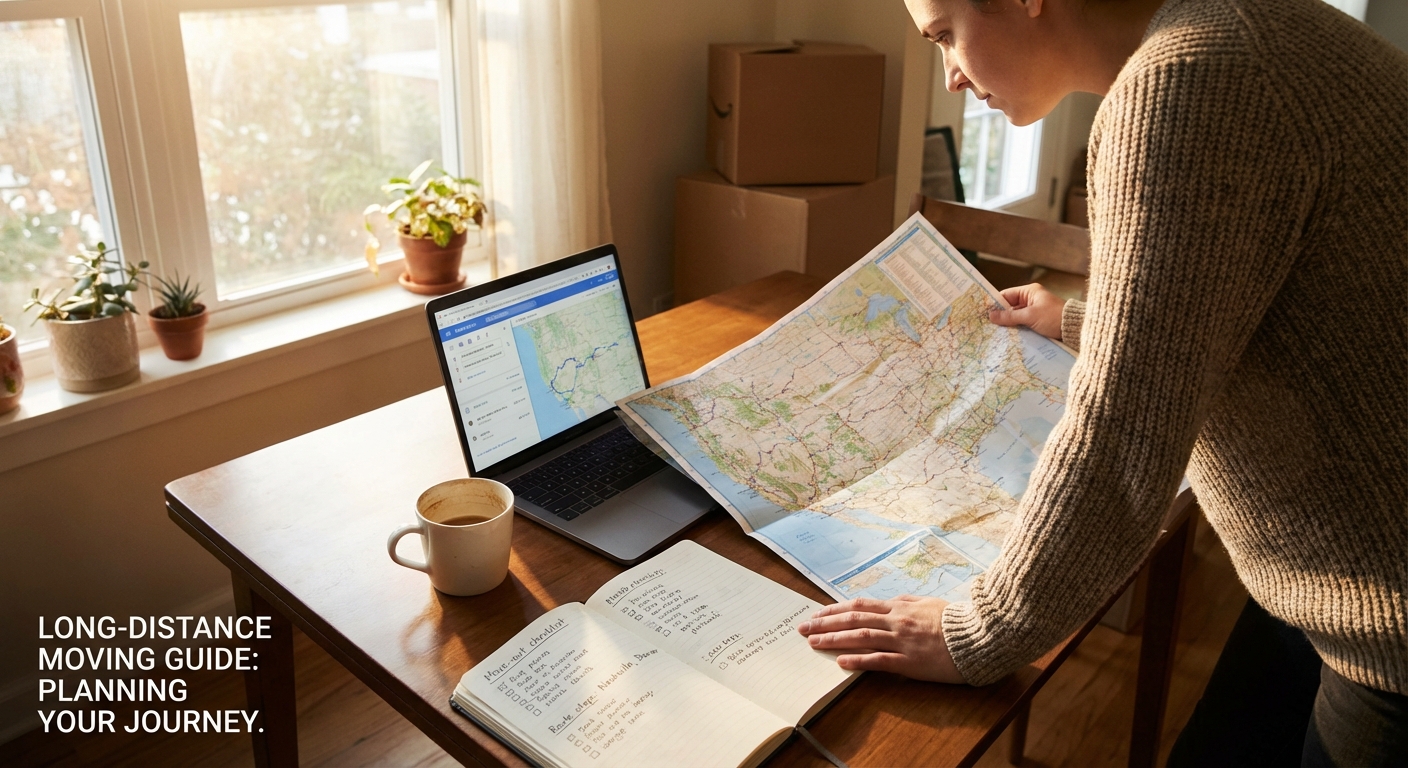
Moving across state lines is one of life’s biggest logistical challenges. Whether you’re relocating for a new job, following family, or chasing better weather, a long distance move involves layers of planning that a local move simply doesn’t. But here’s the good news: with the right preparation and knowledge, your interstate move can go smoothly and even feel exciting.
This guide walks you through every stage of a long distance move, from initial planning to settling into your new home. We’ve helped thousands of people find trusted movers through our platform, and we’ve distilled that experience into the practical, honest advice you’ll find below.
What Qualifies as a Long Distance Move?
Before we dive in, let’s clarify what “long distance” actually means in the moving industry:
- Interstate moves: Any move that crosses state lines, regardless of distance. A move from Kansas City, KS to Kansas City, MO is technically interstate.
- Intrastate long distance: Moves within the same state that exceed a certain mileage threshold (typically 50-100 miles, depending on the state).
- Cross-country moves: Moves spanning 1,000+ miles, often coast to coast.
The distinction matters because interstate moves are regulated by the federal government through the FMCSA, while intrastate moves are regulated at the state level. This affects everything from licensing requirements to how disputes are handled.
If you’re moving to a new city, check out our city-specific moving guides for Los Angeles, New York City, Chicago, Houston, Phoenix, San Antonio, Dallas, San Diego, Denver, or Seattle for location-specific tips and trusted movers.
Your Long Distance Moving Timeline
Planning is the single biggest factor that separates smooth moves from stressful ones. Here’s a detailed timeline to keep you on track.
8-12 Weeks Before Moving Day
Research and planning phase:
- Set your budget. Long distance moves are more expensive than local ones. Get a realistic number in your head before you start getting quotes. Our moving cost guide breaks this down in detail.
- Research moving companies. Start gathering names of licensed, reputable long distance movers. Look for companies with USDOT numbers, positive reviews, and transparent pricing. Our guide on how to choose a moving company covers exactly what to look for.
- Request in-home or virtual estimates. Get at least three detailed estimates. Avoid any company that quotes over the phone without seeing your belongings. Request free quotes through our platform to compare options quickly.
- Decide what to keep, sell, donate, or toss. The less you move, the less you pay. A long distance move is charged primarily by weight and distance, so every box matters.
- Research your new area. Look into neighborhoods, school districts, local services, and cost of living.
6-8 Weeks Before Moving Day
Booking and organizing phase:
- Book your moving company. Lock in your date and get your estimate in writing. Make sure you understand whether it’s a binding or non-binding estimate.
- Choose your insurance coverage. Decide between Released Value Protection and Full Value Protection (more on this below).
- Begin a detailed home inventory. Document every item you plan to move, including condition and approximate value. Take photos of valuable items.
- Start collecting packing supplies. Boxes, tape, bubble wrap, packing paper, and markers. Our complete packing guide has a full materials list.
- Notify important parties. Start the address change process with your employer, banks, insurance companies, subscriptions, and the USPS.
4-6 Weeks Before Moving Day
Packing and preparation phase:
- Begin packing non-essential items. Start with seasonal items, books, decorations, and rarely used rooms like guest bedrooms or storage areas.
- Arrange travel logistics. If driving, plan your route and book hotels. If flying, book flights and arrange ground transportation.
- Handle vehicle transportation. If you can’t drive your car to your new home, research auto transport services.
- Transfer or set up utilities. Schedule disconnections at your current home and connections at your new one. Include electricity, gas, water, internet, and trash service.
- Gather important documents. Collect medical records, school records, prescriptions, and financial documents. These should travel with you, not on the truck.
2-4 Weeks Before Moving Day
Final preparations phase:
- Continue packing systematically. Work room by room, labeling every box with its contents and destination room. Check out our room-by-room packing tips for specific techniques.
- Confirm all details with your mover. Verify dates, addresses, contact numbers, and any special instructions.
- Prepare an essentials box. Pack items you’ll need immediately upon arrival: toiletries, medications, phone chargers, basic kitchen supplies, a change of clothes, sheets, and towels.
- Clean out the fridge and freezer. Plan meals to use up perishables. Movers won’t transport food that can spoil.
- Arrange pet care. If you have pets, plan how they’ll travel and where they’ll stay on moving day.
Moving Week
Final countdown:
- Do a final walkthrough with your mover. Go through the inventory together, confirm the estimate, and discuss any last-minute items.
- Disassemble furniture as needed. Some movers include this in their service; others expect items to be ready.
- Prepare your home for the movers. Clear pathways, protect floors, and reserve parking for the truck.
- Pack your personal essentials. Keep valuables, important documents, medications, and your essentials box with you.
Moving Day
- Be present and available. The crew lead will need your input on fragile items, disassembly, and any special instructions.
- Review the Bill of Lading. This is your contract. Read it carefully before signing. It should list your inventory, estimated costs, delivery dates, and liability coverage.
- Do a final walkthrough. Check every room, closet, cabinet, and the garage. Look behind doors and in the attic.
- Get your driver’s contact information. You’ll want to be able to reach the truck driver during transit.
How to Choose a Long Distance Moving Company
Choosing the right mover is the most important decision in your entire move. A great company makes the process seamless; the wrong one can turn it into a nightmare. Here’s what to evaluate.
Verify Licensing and Registration
Every legitimate interstate moving company must be registered with the FMCSA and have a USDOT number. This is non-negotiable.
How to verify:
- Visit FMCSA’s Protect Your Move website
- Enter the company’s USDOT number or name
- Check that their registration is active
- Review their complaint history and safety record
If a company can’t provide a USDOT number or isn’t listed, walk away. For a deeper dive, our guide on choosing a moving company covers red flags and green flags in detail.
Types of Long Distance Moving Companies
Understanding the different types of carriers helps you choose the right fit:
| Carrier Type | Description | Best For |
|---|---|---|
| Van line carriers | Large national companies (United Van Lines, Atlas, etc.) with extensive networks | Full-service moves with guaranteed transit |
| Independent carriers | Smaller companies that operate their own trucks | Potentially lower costs, more personalized service |
| Brokers | Companies that connect you with carriers but don’t own trucks | Convenience, but less direct control |
| Freight/container services | You pack; they ship a container or partial truck | Budget-conscious movers willing to do their own packing |
Getting Accurate Estimates
Long distance moves should always involve detailed estimates. Here are the three types you’ll encounter:
Non-Binding Estimate: An approximation based on the estimated weight of your shipment. Your final cost can be higher (up to 10% more at delivery, with the remainder due within 30 days) or lower than the estimate.
Binding Estimate: A guaranteed price based on the items listed in the estimate. Even if your shipment weighs more than estimated, you pay the agreed price. However, if you add items not on the original estimate, the price can change.
Binding Not-to-Exceed Estimate: The best option for consumers. You pay the quoted price or less if the actual weight comes in under the estimate. You never pay more.
Pro tip: Always request a binding not-to-exceed estimate. It gives you the most protection and budget certainty.
Red Flags to Watch For
Be wary of any company that:
- Gives a quote over the phone without seeing your belongings
- Demands a large deposit upfront (reputable companies charge upon delivery or a small booking deposit)
- Has no physical address or USDOT number
- Has an unusually low estimate compared to competitors
- Asks you to sign a blank or incomplete Bill of Lading
- Uses a generic email address (gmail, yahoo) instead of a company domain
- Has a name that’s very similar to a well-known brand but is a different entity
Understanding FMCSA Regulations
The Federal Motor Carrier Safety Administration protects consumers during interstate moves. Here’s what you need to know about your rights.
Your Rights as a Consumer
Under federal law, you have the right to:
- Receive a written estimate before your move
- Choose your level of liability coverage (released value or full value)
- Receive the “Your Rights and Responsibilities When You Move” booklet from your mover
- Be present at the weighing of your shipment (you can request a reweigh if you disagree)
- File a claim for lost or damaged items within 9 months of delivery
- Have the mover respond to your claim within 30 days and resolve it within 120 days
- Not be held hostage. Your mover cannot refuse to deliver your goods for payment above 110% of a non-binding estimate at delivery
Filing a Complaint
If things go wrong, you have recourse:
- File a claim directly with the moving company for loss or damage
- File a complaint with FMCSA if the company violates federal regulations
- Contact your state’s Attorney General for additional consumer protection
- Consider arbitration if your claim is denied (movers must offer this option)
Managing Your Inventory
A detailed inventory is your safety net during a long distance move. It helps you get accurate estimates, track your belongings during transit, and file claims if anything goes wrong.
Creating Your Inventory
Work through your home systematically, room by room:
- List every item with a brief description
- Note the condition (new, good, fair, worn)
- Photograph valuable items from multiple angles
- Estimate replacement value for insurance purposes
- Mark items for special handling (fragile, valuable, oversized)
Inventory Categories
Organize your inventory into categories for easier tracking:
- Furniture: Beds, dressers, tables, chairs, sofas, desks
- Electronics: TVs, computers, gaming systems, speakers
- Kitchen: Appliances, cookware, dishes, utensils
- Clothing and linens: Wardrobe boxes, bedding, towels
- Books and media: Books, records, CDs, DVDs
- Decorations: Artwork, mirrors, lamps, rugs
- Outdoor: Patio furniture, grills, garden tools
- Specialty: Musical instruments, exercise equipment, antiques
Decluttering Before Your Move
Long distance moves are priced by weight and distance. Every pound you eliminate saves money. Use this framework:
| Decision | Criteria |
|---|---|
| Keep | Used regularly, high sentimental value, expensive to replace |
| Sell | Good condition, market value worth the effort |
| Donate | Good condition, not worth selling, someone else can use it |
| Recycle | Materials can be recycled, item has no resale value |
| Discard | Broken, worn out, or not worth donating |
Consider that replacing inexpensive furniture at your destination might cost less than shipping it across the country. If a bookcase cost $50 and would cost $150 to ship based on its weight, the math is clear.
Insurance and Liability Coverage
Protecting your belongings during a long distance move is critical. Understand your options before moving day.
Released Value Protection (Basic Coverage)
- Cost: Free (included by federal law)
- Coverage: $0.60 per pound per item
- Example: If your 50-pound TV is damaged, you receive $30
- Best for: Moves with mostly low-value items
This is the minimum coverage and is essentially no coverage at all for valuable items. A $2,000 television that weighs 50 pounds would only be covered for $30. We strongly recommend upgrading.
Full Value Protection (Comprehensive Coverage)
- Cost: Typically 1-3% of your shipment’s declared value
- Coverage: Repair, replacement, or cash settlement at current market value
- Deductible options: Higher deductibles lower your premium
- Best for: Moves with valuable furniture, electronics, or sentimental items
With Full Value Protection, the mover is responsible for the replacement value of any lost or damaged item, or they can choose to repair it or provide a cash settlement.
Third-Party Moving Insurance
For additional peace of mind, consider purchasing a separate moving insurance policy from a third-party provider. These policies can cover:
- Items excluded from mover’s liability
- Higher coverage limits
- Deductible buydowns
- Natural disasters and acts of God
Companies like MovingInsurance.com and Baker International offer policies specifically designed for household goods in transit.
High-Value Inventory
If you have items worth more than $100 per pound (jewelry, electronics, collectibles, artwork), declare them separately on your High-Value Inventory form. Without this declaration, the mover’s liability may be limited even under Full Value Protection.
Transit Times and Delivery Windows
Understanding transit timelines helps you plan your arrival and temporary living arrangements.
Typical Transit Times
| Distance | Estimated Transit Time |
|---|---|
| Under 500 miles | 1-3 business days |
| 500-1,000 miles | 3-5 business days |
| 1,000-2,000 miles | 5-10 business days |
| 2,000-3,000 miles | 7-14 business days |
| 3,000+ miles (coast to coast) | 10-21 business days |
Factors That Affect Transit Time
- Season: Summer moves take longer due to higher demand
- Truck routing: Your shipment may share a truck with other customers, adding stops
- Weather: Storms, road closures, and extreme weather can cause delays
- Day of the week: Most deliveries happen Monday through Saturday
- Access issues: Narrow streets, stairs, or elevator-only buildings can extend delivery
Delivery Spread Dates
Most long distance movers provide a delivery window (called a “spread”) rather than a single date. For example, your delivery window might be June 15-20. If the mover misses this window, they may be required to compensate you for delay (check your contract).
Plan for the latest date in the window. If your belongings arrive early, great. If not, you won’t be scrambling.
What to Do During Transit
While your belongings are in transit:
- Stay in contact with your mover. Ask for updates on the estimated delivery date.
- Prepare your new home. Clean, measure rooms, and plan furniture placement.
- Handle the essentials. Live out of your essentials box and suitcase.
- Set up utilities. Make sure everything is working before the truck arrives.
- Explore your new neighborhood. Find the nearest grocery store, pharmacy, hospital, and hardware store.
If you’re moving to cities like Atlanta, Miami, Portland, Nashville, or Austin, our local moving guides can help you get settled faster.
Packing for a Long Distance Move
Packing for a long distance move requires more care than a local one. Your belongings will be on a truck for days, possibly shifting during highway driving, loading, and unloading. Our complete packing guide covers this in full detail, but here are the essentials specific to long distance moves.
Long Distance Packing Tips
- Use quality boxes. Flimsy boxes that might survive a 10-minute local move will collapse under the weight of a multi-day highway trip.
- Pack tightly within boxes. Fill all gaps with packing paper or bubble wrap. Items that shift during transit are items that break.
- Don’t overload boxes. Heavy items in small boxes, light items in large boxes. The standard weight limit is 50 pounds per box.
- Wrap furniture. Use moving blankets and stretch wrap to protect surfaces from scratches and dings.
- Label everything. Include the room destination and a brief description of contents on at least two sides of each box. Consider a numbered inventory system.
- Seal boxes completely. Use quality packing tape on all seams. Long distance moves involve more handling, and boxes that pop open cause problems.
Items to Transport Yourself
Some things should travel with you rather than on the truck:
- Important documents: Passports, birth certificates, financial records, medical records
- Medications: Prescriptions you need daily or that are temperature-sensitive
- Valuables: Jewelry, family heirlooms, irreplaceable photos
- Electronics data: Back up computers and keep hard drives with you
- Essentials box: Everything you need for the first 1-2 days at your new home
Special Considerations for Long Distance Moves
Moving with Pets
Long distance moves are stressful for pets. Plan ahead:
- Update vaccinations and get health certificates. Many states require health certificates for pets crossing state lines.
- Keep routines consistent. Feed and walk your pets on their normal schedule as much as possible.
- Never put pets on the moving truck. They must travel with you or via a pet transport service.
- Prepare a pet essentials kit. Food, bowls, leash, litter box, medications, and comfort items.
- Research veterinarians at your destination. Have a new vet identified before you arrive.
Moving with Children
- Involve them in the process. Let older kids pack their own essentials box.
- Maintain routines. Keep bedtimes, mealtimes, and activities as normal as possible.
- Research schools early. If changing school districts, handle enrollment paperwork before the move.
- Explore the new area together. Look at maps, photos, and videos of your new neighborhood.
- Acknowledge their feelings. Moving is hard for kids. Give them space to express concerns.
Moving a Home Office
Remote work makes home office moves increasingly common:
- Back up everything. Cloud storage and external drives for all work files.
- Photograph your setup. Take pictures of cable configurations and desk arrangements.
- Coordinate with your employer. Notify IT about your move, especially if changing states (tax implications).
- Plan for downtime. You may need a day or two without your full office setup.
Vehicle Transportation
If driving your car isn’t practical:
- Open transport: Most affordable, your car is loaded on an open carrier. Fine for most vehicles.
- Enclosed transport: More expensive, but protects your car from weather and road debris. Recommended for luxury or classic cars.
- Terminal-to-terminal vs. door-to-door: Terminal pickup is cheaper but less convenient.
- Timing: Book auto transport 2-4 weeks in advance and coordinate delivery with your arrival.
Cost Management Strategies
Long distance moves are expensive, but there are legitimate ways to reduce costs. For a full breakdown, see our moving cost guide.
Ways to Save on a Long Distance Move
- Move during off-season. October through April typically offers lower rates and more availability.
- Choose a mid-month, mid-week moving date. End-of-month and weekends are the most expensive times.
- Declutter aggressively. Every 100 pounds you eliminate saves $50-150 on a long distance move.
- Pack yourself. Self-packing can save $500-2,000 depending on your home size.
- Compare multiple estimates. Get at least three quotes through a service like Moving Company HQ.
- Consider freight or container services. PODS, ABF U-Pack, and similar services can save 20-40% compared to full-service moves.
- Ask about discounts. Military, senior, AAA member, and corporate relocation discounts are common.
- Negotiate. Moving estimates are not set in stone. If you have a lower competing quote, ask the company you prefer to match it.
Average Long Distance Moving Costs
| Home Size | Average Cost (1,000 miles) | Average Cost (2,500 miles) |
|---|---|---|
| Studio / 1 Bedroom | $1,500 - $3,000 | $2,500 - $5,000 |
| 2 Bedrooms | $2,500 - $5,000 | $4,000 - $7,500 |
| 3 Bedrooms | $4,000 - $7,500 | $6,000 - $10,000 |
| 4+ Bedrooms | $6,000 - $10,000 | $8,000 - $15,000 |
These are averages. Your actual cost depends on the weight of your belongings, the specific origin and destination, time of year, and additional services.
Unpacking and Settling In
You’ve survived the move. Now it’s time to turn your new house into a home.
First Day Priorities
- Supervise delivery. Check items off your inventory as they come off the truck. Note any damage immediately.
- Direct traffic. Tell movers which room each piece of furniture and labeled box belongs in.
- Check for damage. Inspect furniture and boxes before the crew leaves. Note any damage on the delivery receipt.
- Set up beds. Everyone needs a good night’s sleep after a long move.
- Unpack the essentials box. Toiletries, medications, phone chargers, and basic kitchen supplies.
First Week Priorities
- Unpack the kitchen. Being able to prepare meals reduces stress and takeout costs.
- Set up bathrooms. Towels, toiletries, shower curtain, and bath mat.
- Arrange bedrooms. Clothes, linens, and personal items.
- Handle utilities and services. Verify everything is working and set up internet service.
- Update your address. USPS, DMV, voter registration, banks, insurance, and subscriptions.
First Month Tasks
- Explore your neighborhood. Find your go-to grocery store, coffee shop, gym, and restaurants.
- Meet your neighbors. A simple introduction goes a long way in feeling at home.
- Register your vehicle. Most states require registration within 30-60 days.
- Update your driver’s license. Required within 30-90 days in most states.
- Find new service providers. Doctor, dentist, veterinarian, mechanic, and other professionals.
- File damage claims. If any items were damaged during the move, file your claim within 9 months of delivery.
State-Specific Moving Considerations
Different states have different requirements for new residents. Here are some common ones:
- Vehicle registration deadlines: Range from 10 to 90 days after establishing residency
- Driver’s license transfer: Typically required within 30-90 days
- Voter registration: Must re-register in your new state
- Tax implications: Income tax rates, property taxes, and sales taxes vary significantly
- Pet regulations: Some states and cities have breed restrictions or additional vaccination requirements
Research your specific destination state’s requirements. Our city guides for Charlotte, San Francisco, Minneapolis, Las Vegas, and Jacksonville include state-specific information for those areas.
Long Distance Moving Checklist
Use this comprehensive checklist to stay on track:
8-12 Weeks Out
- Set your moving budget
- Research moving companies and verify USDOT numbers
- Request at least 3 in-home or virtual estimates
- Begin decluttering and selling unwanted items
- Research your destination city and neighborhood
6-8 Weeks Out
- Book your moving company and get written confirmation
- Choose your liability coverage (released value or full value)
- Start detailed home inventory with photos
- Begin collecting packing supplies
- Notify employer, banks, insurance, and subscriptions
4-6 Weeks Out
- Begin packing non-essential items
- Book travel (flights, hotels, car rental)
- Arrange vehicle transportation if needed
- Schedule utility disconnections and connections
- Gather important documents to carry with you
2-4 Weeks Out
- Continue packing room by room
- Confirm all details with your mover
- Prepare essentials box
- Clean out fridge and freezer
- Arrange pet travel plans
Moving Week
- Final walkthrough with mover
- Finish packing
- Prepare home for movers (clear pathways, protect floors)
- Pack personal essentials bag
- Confirm delivery window
Moving Day
- Be present for loading
- Review and sign Bill of Lading
- Do final walkthrough of empty home
- Get driver’s contact information
- Lock up and hand over keys
After Delivery
- Check items off inventory
- Note any damage on delivery receipt
- File damage claims within 9 months
- Unpack essentials first
- Update address everywhere
Getting Started
A long distance move is a big undertaking, but it doesn’t have to be overwhelming. The key is starting early, staying organized, and choosing the right moving company.
If you’re ready to take the first step, get free quotes from licensed long distance movers through Moving Company HQ. We connect you with vetted, FMCSA-registered carriers so you can compare prices and services with confidence.
For more moving advice, check out our first-time mover’s handbook, our blog posts on how to save money on your move and moving day tips from professional movers, or browse our full list of moving services to see how we can help.
Your new chapter is waiting. Let’s make sure you get there with your belongings, your budget, and your sanity intact.
Frequently Asked Questions
How far in advance should I book a long distance move?
How much does a long distance move cost on average?
What is the difference between a binding and non-binding estimate?
Are my belongings insured during a long distance move?
How long does a long distance move take?
What items can't be shipped by long distance movers?
Should I tip long distance movers?
What is the FMCSA and why does it matter for my move?
Our team of moving experts creates practical, research-backed guides to help make your next move easier.