Moving to South Florida? Why Your Air Conditioning Should Be Your Top Post-Move Priority
Check the AC before you unpack in South Florida: how to test the system, cut humidity, and spot problems during move-in week.
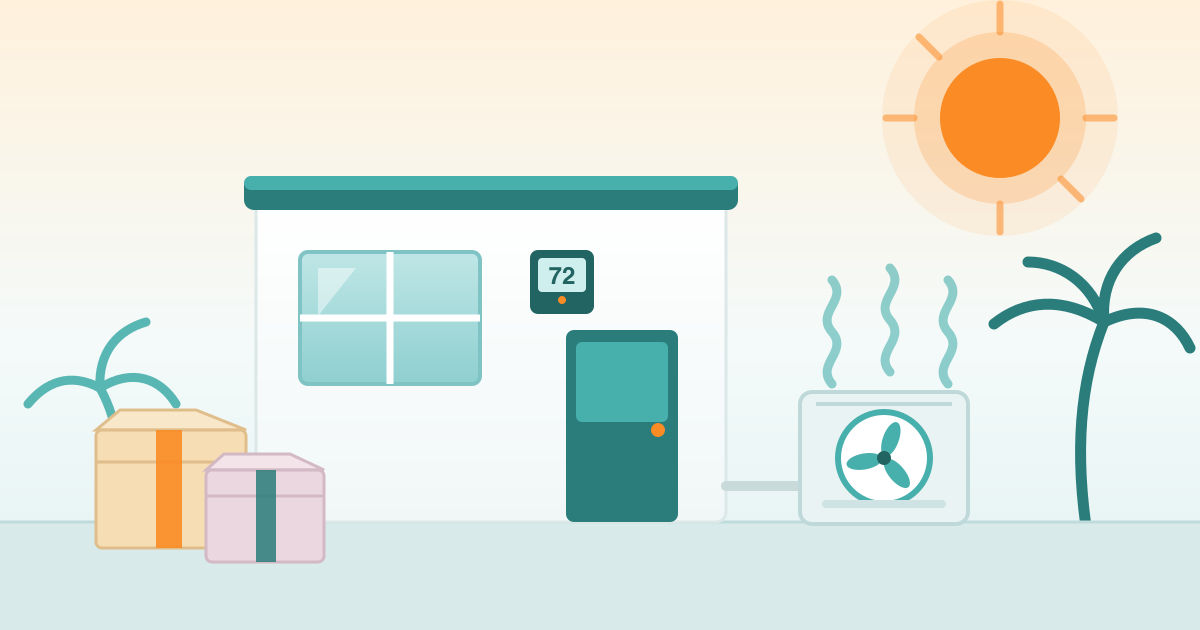
Air conditioning decides how the first week in a new South Florida home goes. Heat and humidity start working on the house and everything inside it as soon as the truck doors open, and a system that is not cooling or not removing moisture can damage furniture, mattresses, paperwork, and electronics before the boxes are unpacked.
Palm Beach County stays warm and humid through most of the year, and a house that sits closed with the system switched off gets uncomfortable quickly. Soft furnishings and cardboard pull moisture out of the air, mold can take hold on damp surfaces within a few days, and once it starts it spreads through the air handler and ductwork. Cooling keeps the rooms livable. Moisture removal is what protects the building, and the same system has to do both.
Here is what to check in the first days in a South Florida home, and what to sort out before the furniture is in the way.
Run the system before you unpack anything
Set the thermostat a few degrees below the indoor temperature on your first walkthrough and give it twenty minutes. You want cool air at the supply vents and the outdoor condenser running.
Warm air after half an hour points to a refrigerant, compressor, or airflow problem, and the seller may not have known about it. Finding it while the house is empty is far easier than finding it with a sofa against the return vent.
While the system runs, listen at the air handler closet. Rattling, grinding, or a blower that starts and stops usually means a failing part. Check the pan under the air handler for standing water and look at the ceiling below it for stains.
Start with the parts that fail quietly in a closed-up house
Three components cause most of the surprises in a house that has been sitting empty:
- The filter. Pull it out and read the size printed on the frame. A filter that has been in place through a vacant stretch is often matted with dust, and a clogged filter strains the blower and cuts airflow to the far rooms.
- The condensate drain. Algae grows in the drain line in Florida heat. When the line clogs, water backs up into the pan, then into the ceiling or the closet floor. A float switch should shut the system off before the pan overflows, so confirm one is fitted under the air handler.
- The outdoor unit. Clear leaves and debris from around the cabinet, keep about two feet of clearance, and check that the breaker and the service disconnect are on. A coil packed with grass clippings and lint runs hot and cools poorly.
Bring the indoor humidity down in the first week
Target 30 to 50 percent indoor humidity. Many South Florida homes run higher than that when the system is undersized for the house, the doors stay open all day, or the drain line is partially blocked.
Watch for the signs that moisture is winning: condensation on the inside of windows, cardboard that feels soft, a musty smell in closets, and damp patches where the air handler sits. Keep windows and doors closed as much as unloading allows, and run the bath and kitchen fans.
Boxes that sat in a hot truck hold moisture, so unpack paper, photos, books, and fabric early instead of leaving them stacked in a closed room for a week. The moving-day essentials box is a good place to keep the filter size, the thermostat settings, and the service records while everything else is still packed.
Ask the seller for the paperwork you will actually use
Request the equipment age, model and serial numbers, the filter size, the last service invoice, and whether a maintenance agreement or manufacturer warranty is in place and whether it transfers to you. Your agent can usually pull this from the seller before closing.
Age is the number that matters most. Central systems commonly last 12 to 15 years, and in South Florida heat a system past that point is close to replacement. That is a cost worth planning for instead of discovering in July, and it is a fair point to raise during negotiations.
If the records are gone, a technician can date the equipment from the serial plate on the air handler and the outdoor unit.
Set up power and cooling service before the truck arrives
Schedule the electric account transfer for the closing date so nobody shuts the power off between owners. Most of Boynton Beach and the rest of Palm Beach County is served by Florida Power & Light, and accounts can be started online before you have the keys.
Book a maintenance visit for your first week or two instead of waiting for a breakdown. A technician can reach the air handler without moving furniture, clean the coil, test the capacitor and contactor, and vacuum the drain line before it clogs in your first rainy stretch. If the house is older, ask them to look at the ductwork in the attic while they are up there. Ducts that have pulled apart or are sweating through their insulation waste cooling and push humidity into rooms that never feel dry.
Plan moving day around the heat
A few things keep the move and the cooling system from working against each other:
- Ask the crew to leave the system running while they unload. Propped doors let in a lot of humid air, and a running system pulls it back out.
- Keep boxes out of the air handler closet and away from the return grille.
- Leave mattresses, leather, artwork, and electronics out of the garage and off the driveway. An hour in direct Florida sun can warp frames and damage finishes.
- Carry candles, chocolate, medications, and vinyl in the car rather than the truck.
- Unpack anything that feels damp as soon as it comes inside. Damp items sealed in a closed room are where mold problems begin.
Planning an August move is workable with the right timing, and the summer moving tips cover truck scheduling and heat protection in more detail.
Match the house to the cooling load you have
Small habits in the first days make a difference to how hard the system has to work:
- Close blinds on west-facing windows through the afternoon, where the sun load is heaviest.
- Use ceiling fans to move air in occupied rooms and switch them off in empty ones. Fans cool people, not rooms.
- Leave interior doors open so air can return to the handler.
- Check the weatherstripping and sweeps on exterior doors. Florida humidity finds every gap.
- Resist the urge to set the thermostat to 65 to cool the house faster. It does not cool faster and it raises the bill.
Know the signs that mean call a contractor, not unpack
Turn the system off at the thermostat and call for service when you see warm air from the vents after 30 minutes, ice on the copper line at the outdoor unit, water in the pan or stains on the ceiling, a burning smell near the air handler, or a breaker that trips each time the unit starts.
Move-in week is a bad time to sit on a callback list. For homes in Boynton Beach and across Palm Beach County, Ocean Air, an AC company in Boynton Beach repairs, maintains, and replaces central systems for houses, condos, and businesses. The company is family-owned, has worked in the area since 2016, and holds Florida license CAC 1818673. Every air handler it installs gets a secondary drain pan and float switch, which is the pairing that keeps a clogged drain line from soaking a ceiling. The company rates 4.9 on Google from more than 200 customer reviews, and the owner, Joe, still answers calls and follows up after jobs. Reach the team at (561) 205-2665.
The first repair is cheaper when it happens on your schedule. Take an hour with the system before the truck backs in, and the rest of the move stays about furniture and boxes.
Frequently Asked Questions
Should I turn the air conditioning on before moving furniture into a South Florida home?
What indoor humidity should I keep after moving into a South Florida home?
How often should the AC filter be changed in a Florida home?
Can South Florida heat damage my belongings during the move itself?
What should I ask the previous owner about the air conditioning system?
Our team of moving experts creates practical, research-backed guides to help make your next move easier.
Related Articles

Moving Into a New Home: A Yard and Landscaping Checklist
Use this complete yard and landscaping checklist for new homeowners. From safety sweeps and soil tests to low-maintenance upgrades and seasonal care plans.
Moving Checklist: How to Protect, Pack, and Restore Wooden Furniture
Learn how to protect, pack, and restore wooden furniture during a move, from pre-move inspection and wrapping techniques to scratch repair and professional restoration.
How to Prepare Important Documents Before a Move
Learn how to prepare important documents before a move, from sorting, digitizing, and backing up records to packing a personal document folder.