Moving With Pets: How to Keep Them Safe and Calm
Moving with pets? Learn how to reduce stress for dogs, cats, and other animals during a move with our vet-backed tips for every stage of the process.
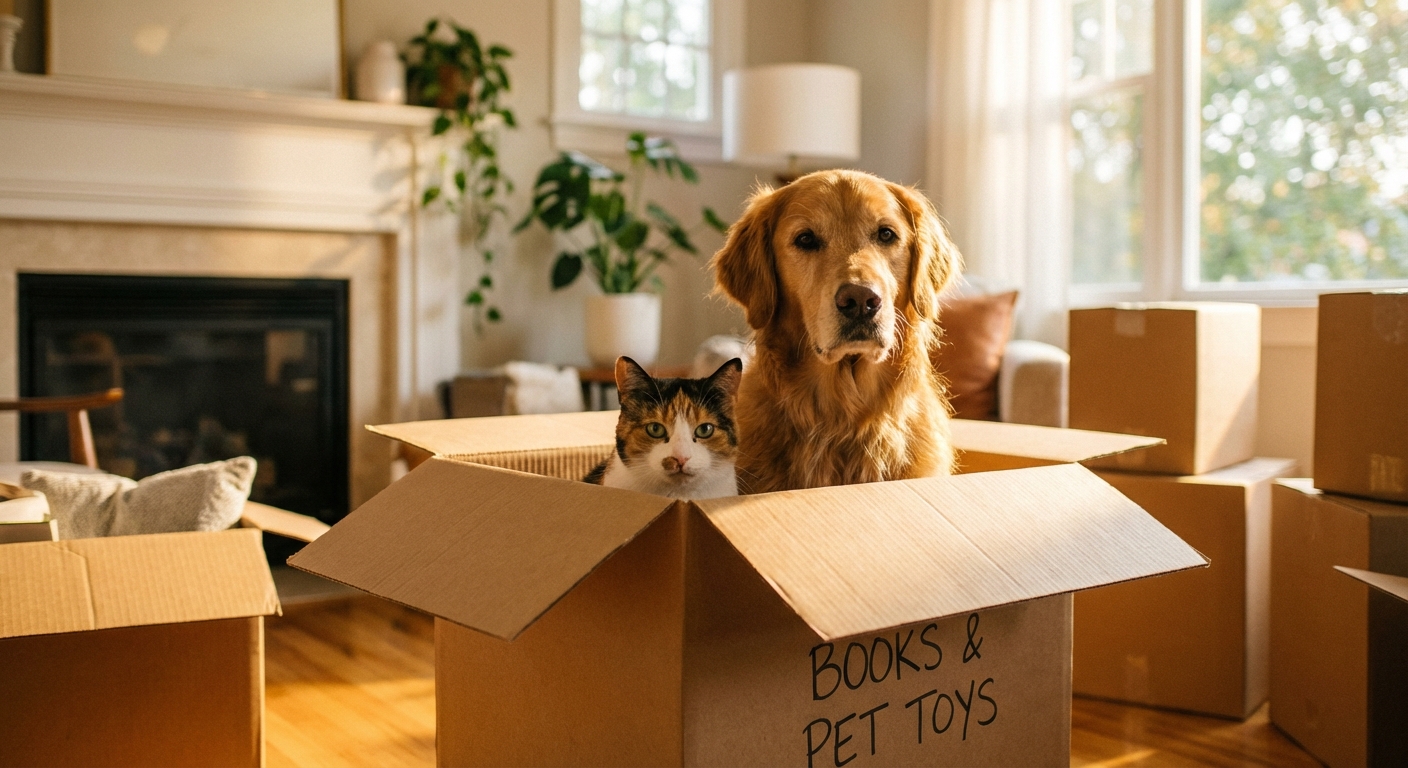
Your dog does not understand that the boxes everywhere mean you are getting a bigger backyard. Your cat does not know that the unfamiliar smells and strange people in the house are temporary. All they know is that their world is changing, and that is stressful.
Moving is hard enough for humans who understand what is happening. For pets, the disruption to their routine, environment, and sense of safety can cause real anxiety. But with the right preparation, you can minimize the stress for your animals and make the transition as smooth as possible.
Here is how to move with pets at every stage, from weeks before the move to settling into your new home.
Before the Move: Preparation
Visit Your Vet (4-6 Weeks Out)
Schedule a visit with your veterinarian well before the move. This appointment serves several purposes:
- Health check: Make sure your pet is healthy enough for travel
- Vaccinations: Ensure all vaccinations are current
- Health certificate: If moving across state lines, most states require a Certificate of Veterinary Inspection issued within 10 days of travel
- Medications: Discuss anti-anxiety options if your pet is particularly nervous
- Medical records: Get copies of your pet’s complete medical history, vaccination records, and any ongoing treatment plans
- Microchip update: Make sure your contact information on the microchip is current, and update it to your new address
Research Destination Requirements
Different states and municipalities have different regulations for pets:
| Requirement | Details |
|---|---|
| Rabies vaccination | Required in all states, but booster timing varies |
| Health certificate | Required by most states for incoming pets |
| Breed restrictions | Some cities restrict certain dog breeds |
| License requirements | Most municipalities require dog licenses |
| Quarantine | Hawaii requires a quarantine period |
| Exotic pet laws | Vary significantly by state for non-traditional pets |
If you are moving to cities like Denver or Miami, check local ordinances for any breed-specific legislation or pet regulations.
Get Your Pet Used to Their Carrier (3-4 Weeks Out)
If your pet is not already comfortable in a travel carrier, start conditioning them now. This is especially important for cats, who often associate carriers with vet visits.
How to make the carrier feel normal:
- Leave the carrier out in a common area with the door open
- Place treats, toys, and a familiar blanket inside
- Feed meals near or inside the carrier
- Take short car rides to build tolerance (not just to the vet)
- Never force your pet into the carrier; let them explore on their own terms
- Spray the carrier with Feliway (for cats) or Adaptil (for dogs) calming pheromones
Prepare a Pet Moving Kit
Pack a bag specifically for your pet that travels with you, not on the moving truck:
- Food and treats (enough for the trip plus a few extra days)
- Water and a portable water bowl
- Leash, collar with ID tags, and harness
- Medications
- Favorite toys and a familiar blanket or bed
- Poop bags and litter supplies
- Paper towels and cleaning supplies for accidents
- Recent photo of your pet (in case they get lost)
- Copies of medical records and vaccination certificates
During the Packing Phase
Packing disrupts your pet’s world. Their favorite napping spot gets boxed up, their routine gets thrown off, and strangers might be in and out of the house. Here is how to minimize the impact.
Keep Routines Consistent
Pets thrive on predictability. Even when everything around them is changing, try to maintain:
- Same feeding times and same food
- Same walk schedule and routes (for dogs)
- Same play times and attention patterns
- Same sleeping arrangements for as long as possible
Create a Safe Room
Designate one room as your pet’s “safe zone” during the packing process:
- Keep this room unpacked and normal for as long as possible
- Put their bed, toys, food, and water there
- Close the door when movers or helpers are in the house
- This gives your pet a retreat when the activity gets overwhelming
Watch for Signs of Stress
Pets cannot tell you they are anxious, but they show it through behavior changes:
Dogs may show stress by:
- Excessive panting or drooling
- Pacing or restlessness
- Loss of appetite
- Destructive behavior (chewing, digging)
- Hiding or clinginess
- Excessive barking or whining
- Changes in bathroom habits
Cats may show stress by:
- Hiding more than usual
- Refusing to eat
- Excessive grooming or fur loss
- Urinating or defecating outside the litter box
- Aggression or irritability
- Excessive vocalization
- Vomiting or diarrhea
If you notice persistent stress signs, talk to your vet about short-term calming solutions.
Moving Day
Moving day is the most chaotic and potentially dangerous day for your pet. Between open doors, heavy items being carried, and unfamiliar people, the risk of escape or injury is real.
Option 1: Board Your Pet or Use a Pet Sitter
The safest option for moving day is removing your pet from the chaos entirely.
- Board them at a kennel or your vet’s office for the day
- Leave them with a trusted friend or family member
- Hire a pet sitter to watch them at their home
This eliminates the risk of escape, injury, or extreme stress. Many people find this peace of mind is worth the cost.
Option 2: Keep Your Pet in a Secure Room
If boarding is not an option, confine your pet to one room (preferably the room packed last):
- Put a sign on the door: “DO NOT OPEN - Pet Inside”
- Tell every mover and helper about the pet’s location
- Keep food, water, litter box, and comfort items in the room
- Check on them periodically
- This room gets packed and cleared last
Keep the Carrier Accessible
Have your pet’s carrier ready and accessible. When it is time to leave, you want to be able to secure your pet quickly without searching through packed boxes.
Update ID Tags
Before you leave your old home, make sure your pet’s collar tag has your cell phone number (not your old landline) and ideally your new address. If the worst happens and your pet escapes during the move, an updated tag dramatically increases the chances of being reunited.
Traveling With Pets
Driving With Dogs
Most dogs are better travelers than cats. Many actually enjoy car rides. Still, a cross-country drive is different from a trip to the park.
Tips for driving with dogs:
- Use a crash-tested crate or dog seatbelt harness (loose dogs are a safety hazard)
- Stop every 2-3 hours for bathroom breaks and short walks
- Never leave your dog in a parked car, even for a few minutes
- Keep the car at a comfortable temperature
- Bring water and offer it at every stop
- Feed small meals to prevent car sickness
- Bring familiar items like their blanket or a worn t-shirt of yours
Driving With Cats
Cats are generally not fans of car travel. The unfamiliar environment, motion, and noise can be very stressful.
Tips for driving with cats:
- Keep them in a secure carrier at all times (a loose cat in a moving car is dangerous for everyone)
- Cover the carrier with a light blanket to reduce visual stimulation
- Play calming music at low volume
- Use Feliway spray in the carrier 30 minutes before travel
- Place a familiar item in the carrier, like a worn t-shirt
- Offer water at stops but do not be surprised if they refuse it
- Set up a portable litter box during long stops (in the car with doors closed, not outside)
- Do not open the carrier in an unsecured environment
Hotel Stays During the Trip
If your drive takes multiple days, book pet-friendly hotels in advance:
- Call ahead to confirm pet policies and fees
- Ask about any size or breed restrictions
- Request a ground-floor room for easy bathroom breaks
- Bring your own pet bedding to protect hotel furniture
- Never leave your pet alone in the hotel room
- Walk dogs in designated pet areas
- Keep cats in their carrier when entering and exiting the room
Flying With Pets
If you are flying to your new home, understand the airline’s pet policy:
In-cabin (small pets):
- Usually limited to pets under 20 pounds in an approved carrier
- Carrier must fit under the seat
- Fees range from $75 to $200 each way
- Book early, as airlines limit the number of in-cabin pets per flight
Cargo (larger pets):
- Required for dogs over 20 pounds on most airlines
- Climate-controlled cargo hold
- More expensive ($200-$500+)
- Temperature restrictions may prevent travel during extreme hot or cold months
- Some brachycephalic (flat-faced) breeds are not allowed in cargo due to breathing risks
Pet transport services:
- Professional companies that specialize in pet relocation
- Handle everything from paperwork to door-to-door transport
- Costs $500-$2,000+ depending on distance and services
- Good option for cross-country moves, especially with multiple pets
Arriving at Your New Home
The first few days in your new home are critical for your pet’s adjustment. A thoughtful approach now prevents behavioral problems later.
For Dogs
Day 1:
- Walk them around the immediate neighborhood so they can sniff and explore
- Show them where their food and water bowls are
- Establish where they will sleep
- Maintain your normal routine as closely as possible
- Keep them on a leash when outside until they learn the boundaries
First Week:
- Gradually expand their walking territory
- Stick to consistent feeding times
- Give extra attention and reassurance
- Supervise interactions with the new yard (check for escape routes in fencing)
- Start with short periods alone and gradually increase
Watch for: Accidents in the house, destructive chewing, excessive barking, or loss of appetite. These are normal stress responses that should resolve within 2-4 weeks.
For Cats
Cats need a more gradual introduction to a new space. Trying to let them explore the entire house on day one usually backfires.
Day 1-3: One room only
- Set up a “base camp” room with their litter box, food, water, bed, and scratching post
- Keep the door closed and let them acclimate to this one room
- Spend time with them in this room
- Do not force them out from under the bed or out of hiding spots
Days 4-7: Gradual expansion
- Open the door and let them explore at their own pace
- Keep the base camp room set up as their retreat
- Do not rearrange or move their supplies yet
- Some cats will venture out quickly; others take a week or more
Week 2 and beyond:
- Gradually move food and litter to their permanent locations
- Allow full house access once they seem comfortable
- Maintain routine and consistency
Watch for: Hiding for extended periods (some hiding is normal, but not eating for more than 48 hours is a concern), urinating outside the litter box, excessive vocalization, or aggression. Contact your vet if these persist beyond the first two weeks.
For Other Pets
Small animals (rabbits, guinea pigs, hamsters): Keep them in their usual enclosure. Set it up in a quiet room away from the chaos. They are less affected by location changes as long as their immediate environment stays the same.
Fish: Transport fish in sealed bags with tank water. Set up the tank first at your new home and let it cycle before adding fish back in. For long moves, consider rehoming and starting fresh.
Reptiles: Maintain temperature carefully during transport. Use insulated containers with heat packs or cooling packs as needed. Set up their enclosure before traveling so it is ready when you arrive.
Birds: Cover the cage during transport to reduce stress. Keep the car temperature stable. Set up their cage in a quiet room first.
Finding a New Vet
Do not wait until there is an emergency to find a veterinarian in your new area.
How to find a good vet:
- Ask your current vet for recommendations
- Check reviews on Google and Yelp
- Ask neighbors and local pet owners
- Look for clinics affiliated with the American Animal Hospital Association (AAHA)
- Visit the clinic before scheduling an appointment to check cleanliness and staff demeanor
Schedule a wellness visit within the first month of moving. This establishes your pet as a patient and gives the new vet a baseline for their health.
Special Considerations for Long-Distance Moves
If you are moving across the country, from New York to Los Angeles for example, there are additional considerations:
- Climate adjustment: Pets moving from cold to hot climates (or vice versa) need time to acclimate. Gradually increase outdoor exposure.
- Altitude changes: Moving to high-altitude cities like Denver can temporarily affect your pet’s energy levels.
- Local wildlife: Different regions have different wildlife risks. Learn about local dangers like coyotes, snakes, or toxic plants.
- Flea and tick prevention: Different regions have different parasite risks. Consult your new vet about appropriate prevention.
The Bottom Line
Moving with pets takes extra planning, but it is entirely doable. The most important things are maintaining routine, minimizing chaos exposure, providing familiar comfort items, and being patient during the adjustment period.
Your pets have been with you through everything. A little extra effort during the move ensures they settle into the new chapter right alongside you.
Planning your move? Get free quotes from pet-friendly moving companies and cross one more thing off your list.
Frequently Asked Questions
How long does it take pets to adjust to a new home?
Should I sedate my pet for the move?
Can movers transport my pets?
Do I need a health certificate to move my pet to another state?
How do I find a new vet after moving?
Our team of moving experts creates practical, research-backed guides to help make your next move easier.
Related Articles
Senior Relocation: How to Make the Move Comfortable and Safe
Planning a senior relocation? Learn how to make the move comfortable, safe, and stress-free with practical tips for downsizing, packing, and choosing the right moving help.
Moving an Office or Business: What Sets It Apart
Office and business moves require different planning than residential moves. Learn what sets commercial moves apart and how to relocate with minimal downtime.

First Apartment Move: A Beginner's Guide
Moving into your first apartment? This beginner's guide covers budgeting, packing, apartment-specific logistics, and what to buy before move-in day.